Crossposted from BorderJumpers, Danielle Nierenberg and Bernard Pollack.
In this regular series we profile advisors of the Nourishing the Planet project. This week, we feature David Lobell, Assistant Professor in Environmental Earth System Science, and a Center Fellow with the Program on Food Security and the Environment, at Stanford University.
 Name: David Lobell
Affiliation: Stanford University
Location: Stanford, CA
Bio: David Lobell is an Assistant Professor at Stanford University in Environmental Earth System Science, and a Center Fellow in Stanford’s Program on Food Security and the Environment. His research focuses on identifying opportunities to raise crop yields in major agricultural regions, with a particular emphasis on adaptation to climate change. Prior to his current appointment, Dr. Lobell was a Senior Research Scholar at FSE from 2008-2009 and a Lawrence Post-doctoral Fellow at Lawrence Livermore National Laboratory from 2005-2007. He received a PhD in Geological and Environmental Sciences from Stanford University in 2005, and a Sc.B. in Applied Mathematics, Magna Cum Laude from Brown University in 2000.
Recent Work:
• The Poverty Implications of Climate-Induced Crop Yield Changes by 2030
• Robust Negative Impacts of Climate Change on African Agriculture
• Climate Change and Food Security: Adapting Agriculture to a Warmer World
What is the relationship between agriculture and global hunger? Agriculture plays a critical role in hunger, both in providing the food to eat and providing the income with which to purchase basic needs. I think it’s a remarkable success that agriculture has historically been able to keep average food supply per capita at sufficient levels, even with rapid population growth. But obviously there are a lot of problems with access around the world and there is a lot of progress needed just to keep up with growing demand.
What is the relationship between climate change and agriculture? At a fundamental level, climate change will force most institutions involved with agriculture, ranging from poor farmers to international companies, to rethink how they do business. The pace of changes we are seeing, and will continue to see, are unprecedented in agriculture’s history. For some, climate change will provide great opportunities to grow and expand, but for most people, especially in the developing world, it threatens to make harsh conditions even harsher.
Can you explain how agriculture can help farmers to both adapt to and mitigate climate change? There are a lot of proposed strategies for adapting to climate change, as well as for using agriculture to mitigate emissions. Without going through each, I can say there is a general need to be more rigorous in evaluating these options, how well they actually work, and thinking creatively about new options and potential co-benefits. For example, some strategies to improve soils could help both for mitigation and adaptation, although exactly how much is not yet clear. I also expect that agriculture will only be able to do so much, and other measures like improving social safety nets will be important.
What sorts of innovations, projects, policies, etc, would you like to see implemented to address hunger and climate change? In general, I think more overall investment in agricultural research will be important, as well as sharing knowledge and resources, such as genetic material, across borders. I would also like to see more effort to identify ongoing actions happening on the ground, and to evaluate their effectiveness. I think this is an area where the Worldwatch Institute is doing a great service.
Why should food consumers in the United States care about the state of agriculture in other countries? My own reasons for caring are that I am convinced agricultural improvements represent a key pathway out of poverty, and that reducing poverty and human suffering is a worthy goal. With climate change, I also think the countries that caused the problem have some responsibility to help identify solutions.
Thank you for reading! If you enjoy our diary every day we invite you to get involved:
1. Comment on our daily posts — we check for comments everyday and want to have a regular ongoing discussion with you.
2. Receive regular updates–Join the weekly BorderJumpers newsletter by clicking here.
3. Help keep our research going–If you know of any great projects or contacts in West Africa please connect us connect us by emailing, commenting or sending us a message on facebook.


 We understand why Barack and Michelle Obama made Ghana their first stop on the African continent.
 In the village of Akimoda, we met the “King” of the village who is working with farmers to grow and market moringa, a plant known as the green gold of Ghana because of its health benefits for people and livestock.
 We learned that slaves were forced to walk to their prisons from all over West Africa. And once they arrived, hundreds were packed into dark dungeons with little food and water. The ones who survived were then herded on to ships, leaving behind their homes, their families and their culture forever. As disturbing as this was to hear, it only strengthened our admiration for the resilience and strength of Ghanaians.
 We found a terrific organic restaurant called Baobab with tons of vegan food (and the only place you will find a soy latte within 200 kilometers). They make fresh fruit smoothies and are located just a short walk from Cape Coast Castle. The best part is that all proceeds benefit a local childrens charity in the area. They have a terrific gift shop next door that turns recycled water bags into purses and wallets. One block away (and near the local market) is a fun and tasty restaurant called Chic Herbs with excellent lentil burgers.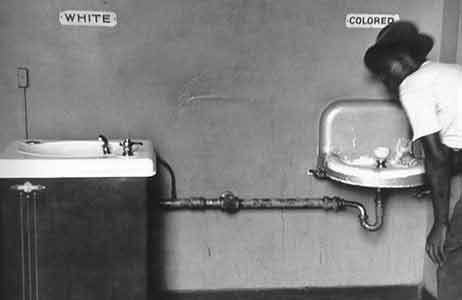
 Earlier this week, we
  In the fight against the spread of HIV/AIDS, there is no silver bullet.
 Johnson Matthey in Germiston , South Africa , just outside of Johannesburg , sees 600 workers pass through its doors every day, heading to work on an assembly lines to make catalytic converters that are inserted in cars to reduce pollution, complying with South Africa ‘s auto environmental emissions standards.