Motley Moose – Archive

Since 2008 – Progress Through Politics

Fifty Years Ago: Lyndon B. Johnson’s Call for a Great Society

Today is the 50th anniversary of President Lyndon B. Johnson’s speech calling upon us to work with him to build a Great Society.
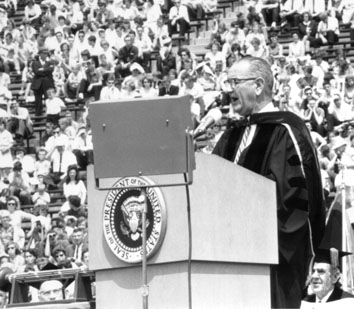
In that speech, President Johnson outlined the principles behind the programs he would later propose; programs  intended to lift Americans out of poverty, first by ending discrimination, then by putting a safety net under our elderly in the form of Medicare and finally, by launching programs intended to improve the well-being of all of our citizens. Some programs were resounding successes and some were unable to be implemented or were dismantled by Ronald Reagan and his demon spawn ideological progeny.

The paths could not be more clearly marked. We can be a Great Society or we can be the puny country that the Reagan Republicans, and now Ryan Republicans, want for us; a country  where George W. Bush’s have-mores hoard the wealth and despoil our natural resources: a path leading us to a country where the middle class is destroyed and our children are left with an earth that is uninhabitable.

A quick scan of right-wing opinion pieces shows that, to Republicans, championing the causes of minorities and the working poor is called “Democrats pandering”. That is because to them it would be pandering, an attempt to get people’s votes by pretending to care about them. To Democrats, civil rights and women’s reproductive rights and the rights of workers and LGBT rights are not poll-tested talking points … they are the core of our party and embedded as Democratic Party principles.

It is not pandering, it is who we are.

It is the promise of a Great Society, one that “rests on abundance and liberty for all” and “demands an end to poverty and racial injustice” with this reminder from LBJ: “we have the power to shape the civilization that we want. But we need your will, your labor, your hearts, if we are to build that kind of society.”

Transcript: Remarks by President Johnson at the University of Michigan (May 22, 1964)

President Hatcher, Governor Romney, Senators McNamara and Hart, Congressmen Meader and Staebler, and other members of the fine Michigan delegation, members of the graduating class, my fellow Americans:

It is a great pleasure to be here today. This university has been coeducational since 1870, but I do not believe it was on the basis of your accomplishments that a Detroit high school girl said, “In choosing a college, you first have to decide whether you want a coeducational school or an educational school.”

Well, we can find both here at Michigan, although perhaps at different hours.

I came out here today very anxious to meet the Michigan student whose father told a friend of mine that his son’s education had been a real value. It stopped his mother from bragging about him.

I have come today from the turmoil of your Capital to the tranquility of your campus to speak about the future of your country.

The purpose of protecting the life of our Nation and preserving the liberty of our citizens is to pursue the happiness of our people. Our success in that pursuit is the test of our success as a Nation.

For a century we labored to settle and to subdue a continent. For half a century we called upon unbounded invention and untiring industry to create an order of plenty for all of our people.

The challenge of the next half century is whether we have the wisdom to use that wealth to enrich and elevate our national life, and to advance the quality of our American civilization.

Your imagination, your initiative, and your indignation will determine whether we build a society where progress is the servant of our needs, or a society where old values and new visions are buried under unbridled growth. For in your time we have the opportunity to move not only toward the rich society and the powerful society, but upward to the Great Society.

The Great Society rests on abundance and liberty for all. It demands an end to poverty and racial injustice, to which we are totally committed in our time. But that is just the beginning.

The Great Society is a place where every child can find knowledge to enrich his mind and to enlarge his talents. It is a place where leisure is a welcome chance to build and reflect, not a feared cause of boredom and restlessness. It is a place where the city of man serves not only the needs of the body and the demands of commerce but the desire for beauty and the hunger for community.

It is a place where man can renew contact with nature. It is a place which honors creation for its own sake and for what it adds to the understanding of the race. It is a place where men are more concerned with the quality of their goals than the quantity of their goods.

But most of all, the Great Society is not a safe harbor, a resting place, a final objective, a finished work. It is a challenge constantly renewed, beckoning us toward a destiny where the meaning of our lives matches the marvelous products of our labor.

So I want to talk to you today about three places where we begin to build the Great Society-in our cities, in our countryside, and in our classrooms.

Many of you will live to see the day, perhaps 50 years from now, when there will be 400 million Americans four-fifths of them in urban areas. In the remainder of this century urban population will double, city land will double, and we will have to build homes, highways, and facilities equal to all those built since this country was first settled. So in the next 40 years we must rebuild the entire urban United States.

Aristotle said: “Men come together in cities in order to live, but they remain together in order to live the good life.” It is harder and harder to live the good life in American cities today.

The catalog of ills is long: there is the decay of the centers and the despoiling of the suburbs. There is not enough housing for our people or transportation for our traffic. Open land is vanishing and old landmarks are violated.

Worst of all expansion is eroding the precious and time honored values of community with neighbors and communion with nature. The loss of these values breeds loneliness and boredom and indifference.

Our society will never be great until our cities are great. Today the frontier of imagination and innovation is inside those cities and not beyond their borders.

New experiments are already going on. It will be the task of your generation to make the American city a place where future generations will come, not only to live but to live the good life.

I understand that if I stayed here tonight I would see that Michigan students are really doing their best to live the good life.

This is the place where the Peace Corps was started. It is inspiring to see how all of you, while you are in this country, are trying so hard to live at the level of the people.

A second place where we begin to build the Great Society is in our countryside. We have always prided ourselves on being not only America the strong and America the free, but America the beautiful. Today that beauty is in danger. The water we drink, the food we eat, the very air that we breathe, are threatened with pollution. Our parks are overcrowded, our seashores overburdened. Green fields and dense forests are disappearing.

A few years ago we were greatly concerned about the “Ugly American.” Today we must act to prevent an ugly America.

For once the battle is lost, once our natural splendor is destroyed, it can never be recaptured. And once man can no longer walk with beauty or wonder at nature his spirit will wither and his sustenance be wasted.

A third place to build the Great Society is in the classrooms of America. There your children’s lives will be shaped. Our society will not be great until every young mind is set free to scan the farthest reaches of thought and imagination. We are still far from that goal.

Today, 8 million adult Americans, more than the entire population of Michigan, have not finished 5 years of school. Nearly 20 million have not finished 8 years of school. Nearly 54 million-more than one-quarter of all America-have not even finished high school.

Each year more than 100,000 high school graduates, with proved ability, do not enter college because they cannot afford it. And if we cannot educate today’s youth, what will we do in 1970 when elementary school enrollment will be 5 million greater than 1960? And high school enrollment will rise by 5 million. College enrollment will increase by more than 3 million.

In many places, classrooms are overcrowded and curricula are outdated. Most of our qualified teachers are underpaid, and many of our paid teachers are unqualified. So we must give every child a place to sit and a teacher to learn from. Poverty must not be a bar to learning, and learning must offer an escape from poverty.

But more classrooms and more teachers are not enough. We must seek an educational system which grows in excellence as it grows in size. This means better training for our teachers. It means preparing youth to enjoy their hours of leisure as well as their hours of labor. It means exploring new techniques of teaching, to find new ways to stimulate the love of learning and the capacity for creation.

These are three of the central issues of the Great Society. While our Government has many programs directed at those issues, I do not pretend that we have the full answer to those problems.

But I do promise this: We are going to assemble the best thought and the broadest knowledge from all over the world to find those answers for America. I intend to establish working groups to prepare a series of White House conferences and meetings-on the cities, on natural beauty, on the quality of education, and on other emerging challenges. And from these meetings and from this inspiration and from these studies we will begin to set our course toward the Great Society.

The solution to these problems does not rest on a massive program in Washington, nor can it rely solely on the strained resources of local authority. They require us to create new concepts of cooperation, a creative federalism, between the National Capital and the leaders of local communities.

Woodrow Wilson once wrote: “Every man sent out from his university should be a man of his Nation as well as a man of his time.”

Within your lifetime powerful forces, already loosed, will take us toward a way of life beyond the realm of our experience, almost beyond the bounds of our imagination.

For better or for worse, your generation has been appointed by history to deal with those problems and to lead America toward a new age. You have the chance never before afforded to any people in any age. You can help build a society where the demands of morality, and the needs of the spirit, can be realized in the life of the Nation.

So, will you join in the battle to give every citizen the full equality which God enjoins and the law requires, whatever his belief, or race, or the color of his skin?

Will you join in the battle to give every citizen an escape from the crushing weight of poverty?

Will you join in the battle to make it possible for all nations to live in enduring peace-as neighbors and not as mortal enemies?

Will you join in the battle to build the Great Society, to prove that our material progress is only the foundation on which we will build a richer life of mind and spirit?

There are those timid souls who say this battle cannot be won; that we are condemned to a soulless wealth. I do not agree. We have the power to shape the civilization that we want. But we need your will, your labor, your hearts, if we are to build that kind of society.

Those who came to this land sought to build more than just a new country. They sought a new world. So I have come here today to your campus to say that you can make their vision our reality. So let us from this moment begin our work so that in the future men will look back and say: It was then, after a long and weary way, that man turned the exploits of his genius to the full enrichment of his life.

Thank you. Goodby.

Bolding added.

The Great Society Programs – 1964 to 1968

Today, the laws enacted between 1964 and 1968 are woven into the fabric of American life, in ways big and small. They have knocked down racial barriers, provided health care for the elderly and food for the poor, sustained orchestras and museums in cities across the country, put seat belts and padded dashboards in every automobile, garnished Connecticut Avenue in Northwest Washington with red oaks.[…]

LBJ prodded the 89th Congress , which was seated from January 1965 to January 1967, to churn out nearly 200 major bills. It is regarded by many as the most productive legislative body in American history – and the starkest contrast imaginable to the Capitol Hill paralysis of today.[…]

For some, the Great Society clearly made life better. In 1964, despite Social Security, more than one out of three Americans over 65 were living below the poverty line, in no small part because of their medical bills. (Forty-four percent had no coverage.) Today, with Medicare available, fewer than one out of seven do.

“These endeavors didn’t just make us a better country,” President Obama said earlier this year. “They reaffirmed that we are a great country.”

Washington Post: The Great Society at 50


Thursday Morning Herd Check-in

  Make sure you let your peeps

  know where to find you!  


    PLEASE Do Not Recommend the check-in diary


        Fierces on the Weather Critter Comment are obligatory welcome.

The morning check-in is an open thread posted to give you a place to visit with the meeses. Feel free to chat about your weather, share a bit of your life, grump (if you must), rave (if you can). The diarist du jour sometimes posts and runs, other times sticks around for a bit, often returns throughout the day and always cares that meeses are happy … or at least contented.

For those new to the Moose, Kysen left a Moose Welcome Mat (Part Deux) so, please, wipe your feet before you walk in the front door start posting.

The important stuff to get you started:

– Comments do not Auto-refresh. Click the refresh/reload on your tab to see new ones. Only click Post once for comments. When a diary’s comment threads grow, the page takes longer to refresh and the comment may not display right away.

– To check for replies to your comments, click the “My Comments” link in the right-hand column (or go to “My Moose”). Comments will be listed and a link to Recent Replies will be shown. (Note: Tending comments builds community)

– Ratings: Fierce means Thumbs Up, Fail means Thumbs Down, Meh means one of three things: I am unFailing you but I can’t Fierce you, I am unFiercing after a mistaken Fierce, … or Meh. Just Meh. (p.s. Ratings don’t bestow mojo, online behaviour does).

– The Recommended list has a prominent place on the Front Page because it reflects the interests of the Moose. When people drive-by, we want them to see what we are talking about: news, politics, science, history, personal stories, culture. The list is based on number of recs and days on the list. Per Kysen: “The best way to control Rec List content is to ONLY rec diaries you WANT to see ON the list.

– Finally, the posting rules for a new diary: “Be excellent to each other… or else

(Some other commenting/posting/tending notes for newbies can be found in this past check-in and, of course, consult Meese Mehta for all your questions on meesely decorum.)

You can follow the daily moosetrails here: Motley Moose Recent Comments.

~

So … what’s going on in your part of Moosylvania?

~


Good Government: Protecting and Preserving Our Nation’s Beauty and History

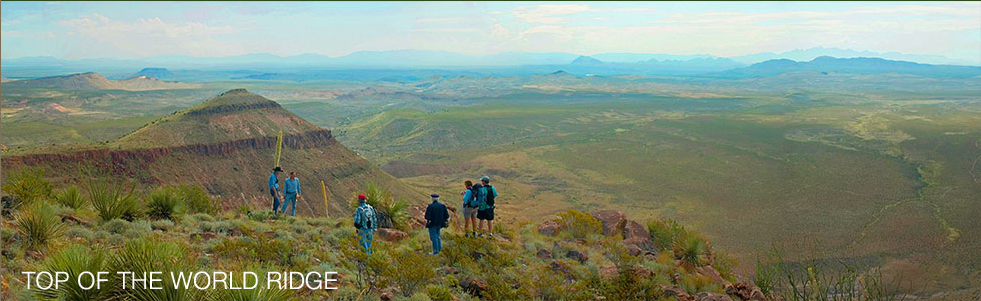
Today, a new national monument will be established in New Mexico:


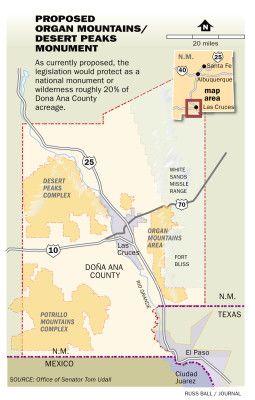
On Wednesday, President Obama will create his second national monument of the year, designating the Organ Mountains in New Mexico a protected area.

The Organ Mountains, located at the southern end of New Mexico, will be the 11th and largest national monument of Obama’s presidency. The White House says that the Organ Mountains-Desert Peaks National Monument will create $7.4 million in new annual economic activity in the region, a finding that first appeared in a 2013 report. That report also found the monument would double the number of outdoor recreation and tourism jobs in the region and contribute $560,000 in state and local tax revenue.

The monument encompasses a total of 496,000 acres, land which contains Native American petroglyphs in its canyons and is one of the most botanically diverse mountain ranges in New Mexico, home to about 870 vascular (i.e. plants with roots, stems, and leaves) plant species and a recorded 210 species of birds. The monument’s designation will “preserve the prehistoric, historic and scientific values of the area for the benefit of all Americans,” White House Press Secretary Jay Carney said. Cattle ranchers who grazed the land before it was designated a monument will still be able to graze there – a rule that’s typical of new monuments – but all drilling and fracking will be prohibited. The area may have some mineral resources, yet new mining is not allowed in areas designated as national monuments.

“This is land that is home to pronghorn and deer, as well as rare plants and animals – some found nowhere else in the world, including the Organ Mountains pincushion cactus,” New Mexico Senator Tom Udall (D) said in December.

From Organ Mountains Desert Peaks National Monument


Las Cruces has a once-in-a-lifetime opportunity to protect some of our area’s most beautiful and significant public lands. These lands possess unique Pre-American, New Mexican, and American history including training sites for the Apollo Space Mission, the Butterfield Stagecoach Trail, Billy the Kid’s Outlaw Rock, Geronimo’s Cave, World War II Aerial Targets, and thousands of Native American Petroglyph’s and Pictographs. Protection of these lands will preserve natural treasures like the Organ Mountains and bring jobs and economic development to our region far into the future.

More good government …

From the Department of the Interior @Interior:

~

~

~

~


~

Good government? I say “Good … government”.


Wednesday Watering Hole: Check In & Hangout for the Herd

Good morning, Moosekind.


  PLEASE Do Not Recommend the check-in diary!
 

        Recs on the weather jar comment are still welcome.

The common Moose, Alces alces, unlike other members of the deer family, is a solitary animal that doesn’t form herds. Not so its rarer but nearest relative, Alces purplius, the Motley Moose. Though sometimes solitary, the Motley Moose herds in ever shifting groups at the local watering hole to exchange news and just pass the time.

 photo moose2_zps78305346.jpg

The morning check-in is an open thread and general social hour.

It’s traditional but not obligatory to give us a weather check where you are and let us know what’s new, interesting, challenging or even routine in your life lately. Nothing is particularly obligatory here except:

Always remember the Moose Golden (Purple?) Rule:

Be kind to each other… or else.

What could be simpler than that, right?

 photo aabook_zps26997a38.jpg


After 60 years: still separate and still unequal


 photo 50yearsafterbrown_zpseb91721d.jpg

When we celebrate the Brown v Board of Education decision as an historic event-be clear it’s time to demonstrate, not just celebrate where we’ve been.

And don’t think of “the South” when you hear about segregated schools. Let’s take a look at the “apartheid schools” that are not southern.

UCLA Report Finds Changing U.S. Demographics Transform School Segregation Landscape 60 Years After Brown v Board of Education

Brown at 60 shows that the nation’s two largest regions, the South and West, now have a majority of what were called “minority” students. Whites are only the second largest group in the West. The South, always the home of most black students, now has more Latinos than blacks and is a profoundly tri-racial region.

The Brown decision in 1954 challenged the legitimacy of the entire “separate but equal” educational system of the South, and initiated strides toward racial and social equality in schools across the nation. Desegregation progress was very substantial for Southern blacks, in particular, says the report, and occurred from the mid-1960s to the late l980s.

The authors state that, contrary to many claims, the South has not gone back to the level of segregation before Brown. It has, however, lost all of the additional progress made after l967, but is still the least segregated region for black students.

 photo igualidadparatodos_zpsa783da25.jpg

Let’s look at some of the key findings:

   Black and Latino students are an increasingly large percentage of suburban enrollment, particularly in larger metropolitan areas, and are moving to schools with relatively few white students.

   Segregation for blacks is the highest in the Northeast, a region with extremely high district fragmentation.

   Latinos are now significantly more segregated than blacks in suburban America.

   Black and Latino students tend to be in schools with a substantial majority of poor   children, while white and Asian students typically attend middle class schools.

   Segregation is by far the most serious in the central cities of the largest metropolitan areas; the states of New York, Illinois and California are the top three worst for isolating black students.

   California is the state in which Latino students are most segregated.

The report concludes with recommendations about how the nation might pursue making the promise of Brown a reality in the 21st century–providing equal opportunity to all students regardless of race or economic background.

 photo thousandcuts_zps5101cd8f.jpg

As a New Yorker, in a supposedly blue/liberal state I find it unacceptable to read the results in reports like this one from the Civil Rights Project:

New York Schools Most Segregated in the Nation

The study explores trends in enrollment and school segregation patterns from 1989 to 2010 at the state and regional levels, including the New York City metropolitan areas of Long Island and the New York City District, and the upstate metropolitan areas of Albany, Buffalo, Rochester, and Syracuse.  

The report also documents the history of school desegregation in the state and across its geographic regions, including key desegregation cases and remedies in Yonkers, Rochester, and Buffalo.

In New York City, in particular, the report highlights both historical and current practices and policies perpetuating racial imbalance and educational inequity across schools, and challenged by parents and community organizations.  

Educational problems linked to racially segregated schools, which are often intensified by poverty concentration, include a less-experienced and less-qualified teacher workforce, high levels of teacher turnover, inadequate facilities and learning materials, high dropout rates, and less stable enrollments. Conversely, desegregated schools are linked to profound benefits for all students.

“This report runs the geographic gamut: from the upstate metros dealing with transforming demographics and an urban-suburban divide, to Long Island, one of the most segregated and fragmented suburban rings in the country, and New York City, the largest school district in the country,” said John Kucsera, lead author of the report.


Though the national media may not be paying attention to the public education organizing and demonstrating taking place, it is happening. Students, parents, teachers, union and community members are fed up, and getting fired up.

Last week The Alliance to Reclaim our Schools took the battle to Washington and there were nationwide actions as well.  

The Alliance to Reclaim Our Schools is a national alliance of parent, youth and community organizations and labor groups fighting for educational justice and equity in access to school resources and opportunities. Together, we represent all students, particularly those from low-income and working-class communities and neighborhoods of color.

We are parents, students, teachers, educational support professionals and community members united around a shared vision for supporting and improving our public schools. We value the input of all stakeholders in our nation’s schools, particularly the voices of community members, teachers and other public school workers who for far too long have been excluded from the decision-making process.

 photo moreclassmates_zpsebffbcb6.jpg

Our Demands

Full funding and support for neighborhood-based community schools: don’t close or privatize them.

oSchools can play an instrumental role in supporting and nurturing our students, but only when they’re adequately and fairly funded.

oRather than closing schools or turning them over to private, unaccountable managers, we should work to support and build up our schools as strong public institutions in the heart of each and every community.

oWe need schools that provide wraparound supports and services for students and their families and act as anchors for their communities.

oPublic education must include an engaging, robust, and well-rounded curriculum that includes the arts, sports, and other creative activities that address the diverse needs of our children and prepare them for college, career and active citizenship.

More teaching, less testing

oThe rise of high-stakes standardized testing has pitted schools against each other, narrowed the curriculum, and reduced teaching and learning to a bubble test.

oTest scores are an obsolete measure of student growth and more accurately reflect students’ out-of-school circumstances rather than the impact of schools and teachers.

oWe should not hold school funding or teachers’ jobs hostage over a single score.

Positive discipline policies and an end to zero tolerance

oHarsh school discipline policies disproportionately impact students of color and students with disabilities.

oThey increase the likelihood that a student will drop out or become involved in the juvenile justice system, and thus contribute to persistent achievement gaps for these students.

oAlternative discipline policies allow students to learn from their mistakes without excluding them from the classroom, and they provide a safer and more supportive school climate.

Quality, affordable education from early childhood through college, including for undocumented students

oThe success of our nation’s public schools rests on creating a pipeline of quality resources and opportunities from a child’s earliest years through higher education.

oThis pipeline starts with quality resources and opportunities in a child’s earliest years to ensure their healthy development and prepare them for kindergarten.

oAccessible, affordable and high quality postsecondary education is necessary to meet workforce needs and ensure a steady flow of civic-minded, educated community leaders.

oWe must also ensure a path to educational opportunity for undocumented students.

A living wage that lifts people out of poverty

oWhile public schools can be a stairway out of poverty, equally important is a living   wage that ensures more hardworking families have the time and resources to dedicate to their children.

oAs America’s inequality gap grows, we must do more to support children and families both inside and outside the classroom.

oEveryone who works hard to care, support, and educate our children deserves a fair wage.

Sign the Education Voter Pledge.

 photo educationvoter_zps1c8295f4.jpg

Check out the Alliance on facebook.

Get angry, get involved, and take action.

Cross-posted from Black Kos


Tuesday Morning Herd Check-in

  Make sure you let your peeps

  know where to find you!  


    PLEASE Do Not Recommend the check-in diary!
   

        Fierces on the Weather Critter Comment are obligatory welcome.

The morning check-in is an open thread posted to give you a place to visit with the meeses. Feel free to chat about your weather, share a bit of your life, grump (if you must), rave (if you can). The diarist du jour sometimes posts and runs, other times sticks around for a bit, often returns throughout the day and always cares that meeses are happy … or at least contented.

For those new to the Moose, Kysen left a Moose Welcome Mat (Part Deux) so, please, wipe your feet before you walk in the front door start posting.

The important stuff to get you started:

– Comments do not Auto-refresh. Click the refresh/reload on your tab to see new ones. Only click Post once for comments. When a diary’s comment threads grow, the page takes longer to refresh and the comment may not display right away.

– To check for replies to your comments, click the “My Comments” link in the right-hand column (or go to “My Moose”). Comments will be listed and a link to Recent Replies will be shown. (Note: Tending comments builds community)

– Ratings: Fierce means Thumbs Up, Fail means Thumbs Down, Meh means one of three things: I am unFailing you but I can’t Fierce you, I am unFiercing after a mistaken Fierce, … or Meh. Just Meh. (p.s. Ratings don’t bestow mojo, online behaviour does).

– The Recommended list has a prominent place on the Front Page because it reflects the interests of the Moose. When people drive-by, we want them to see what we are talking about: news, politics, science, history, personal stories, culture. The list is based on number of recs and days on the list. Per Kysen: “The best way to control Rec List content is to ONLY rec diaries you WANT to see ON the list.

– Finally, the posting rules for a new diary: “Be excellent to each other… or else

(Some other commenting/posting/tending notes for newbies can be found in this past check-in and, of course, consult Meese Mehta for all your questions on meesely decorum.)

You can follow the daily moosetrails here: Motley Moose Recent Comments.

~

So … what’s going on in your part of Moosylvania??

~


Motley Monday Check-in and Mooselaneous Musings

It’s Baaaaaaaaccckkkkk… Monday, that is.

 photo Monday2_zps83ab71bd.jpg


  PLEASE Do Not Recommend the check-in diary!
 

        Recs on the weather jar comment are still welcome.

The check-in is an open thread and general social hour. Come back when time allows through the day – the conversation continues.

It’s traditional but not obligatory to give us a weather check where you are and let us know what’s new, interesting, challenging or even routine in your life lately. Nothing is particularly obligatory here except:

Always remember the Moose Golden (Purple?) Rule:

Be kind to each other… or else.

What could be simpler than that, right??

Monday


Nazi Cabbie Speaks Out. Defends Hitler, Claims He’s Not an Anti-Semite, Just “Critical” of Jews.

After receiving a 30-day suspension for wearing a Nazi armband, a cabbie has decided to speak out about his suspension and profess his belief in national socialism.  In the interview with WCBS, Gabriel Diaz claims that Hitler’s record is distorted, that Nazism is not a racist ideology, that he is not an anti-Semite and denies the Holocaust, among other things.

Basically, he defends Hitler, engages in Holocaust denial, makes clear to the reasonable person that he is an anti-Semite, homophobe, Islamophobe and really anti-anything else that is not Christian (he talks, at one point about Muslims respecting our “Christian heritage”).  To him, evidence does not matter because he is so wrapped up in his hateful ideology that he does not care about the impact upon others caused by his predecessors in those beliefs and caused by others that hold that belief today.

Yes, he does have First Amendment rights to hold these beliefs and the government cannot incarcerate him for them, but the New York City Taxi and Limousine Commission is well within its rights to set a dress code for cabbies and well within its rights to suspend him.

Some quotes follow below.

On Hitler and National Socialism:

We’ve been told lies about Hitler.  We’ve told lies about National Socialism.

On what made him believe that Hitler was not a bad guy:

Independent websites that taught us the other side of Hitler.

On the Holocaust:

I don’t want to talk about what had allegedly happened over there.  I have no comment on that.  I have no comment on that at this point.

On anti-Semitism and his opinion of Jews:

There’s anti-Semitism because they [Jews] want you to believe there’s anti-Semitism…  I don’t hate Jews.  I’m critical of them, but I don’t hate them.

On apologizing:

It pains me to apologize…  If I have to apologize, then a homosexual should have to apologize for being homosexual and being open and gay [unintelligible attempt at flamboyance in bad attempt to imitate caricature of homosexuality]

On homosexuality:

Aren’t a lot of people upset because homosexuals run around freely with their gay flag and their speedos and dressed like this and saying ‘I’m proud to be gay? [Editor’s note:  He does some really bad acting and demonstrating while saying all this]

On Muslims:

If they want to suspend me for wearing a Nazi armband, why don’t they suspend a Muslim for wearing a turban? … If I’m not supposed to be mixing business with pleasure, then a Muslim’s not supposed to be wearing his turban while driving.

On the role of government when it comes to the races:

Letting them to live amongst their own kind


Sunday All Day Check-in for the Herd

  Make sure you let your peeps

  know where to find you!  


    PLEASE Do Not Recommend the check-in diary!
   

        Fierces on the Weather Critter Comment are obligatory welcome.

The morning check-in is an open thread posted to give you a place to visit with the meeses. Feel free to chat about your weather, share a bit of your life, grump (if you must), rave (if you can). The diarist du jour sometimes posts and runs, other times sticks around for a bit, often returns throughout the day and always cares that meeses are happy … or at least contented.

On weekends (and holidays), you may find the check-in thread earlier or later than normal because … it is the weekend! Moosies need their beauty rest:

For those new to the Moose, Kysen left a Moose Welcome Mat (Part Deux) so, please, wipe your feet before you walk in the front door start posting.

The important stuff to get you started:

– Comments do not Auto-refresh. Click the refresh/reload on your tab to see new ones. Only click Post once for comments. When a diary’s comment threads grow, the page takes longer to refresh and the comment may not display right away.

– To check for replies to your comments, click the “My Comments” link in the right-hand column (or go to “My Moose”). Comments will be listed and a link to Recent Replies will be shown. (Note: Tending comments builds community)

– Ratings: Fierce means Thumbs Up, Fail means Thumbs Down, Meh means one of three things: I am unFailing you but I can’t Fierce you, I am unFiercing after a mistaken Fierce … or Meh. Just Meh. (p.s. Ratings don’t bestow mojo, online behaviour does).

– The Recommended list has a prominent place on the Front Page because it reflects the interests of the Moose. When people drive-by, we want them to see what we are talking about: news, politics, science, history, personal stories, culture. The list is based on number of recs and days on the list. Per Kysen: “The best way to control Rec List content is to ONLY rec diaries you WANT to see ON the list.

– Finally, the posting rules for a new diary: “Be excellent to each other… or else

(Some other commenting/posting/tending notes for newbies can be found in this past check-in and, of course, consult Meese Mehta for all your questions on meesely decorum.)

You can follow the daily moosetrails here: Motley Moose Recent Comments.

~

So, what’s going on in your part of Moosylvania??


~


Weekly Address: President Obama – Working When Congress Won’t Act

The President’s Weekly Address post is also the Weekend Open News Thread. Feel free to share other news stories in the comments.


From the White HouseWeekly Address

In this week’s address, the President discussed actions to expand opportunity for more Americans, with or without the help of Republicans in Congress, including his Administration’s efforts to cut red tape for major transportation infrastructure projects. In the coming days, the President will meet with business leaders to highlight the importance of bringing jobs back to America and will also discuss the economic benefits of making it easier for tourists to visit and spend money at attractions in the U.S., which in turn helps local businesses and grows the economy for everyone.

Transcript: Weekly Address: Working When Congress Won’t Act

Hi, everybody.

At a time when our businesses have created 9.2 million new jobs in just over four years, and more companies are considering bringing jobs back from overseas, we have a choice to make.  We can make it easier for businesses to invest in America – or we can make it harder.

I want to work with Congress to create jobs and opportunity for more Americans.  But where Congress won’t act, I will.  And I want to talk about three things we’re doing right now.

First, we’re helping more businesses bring jobs to America from overseas.  Three years ago, my Administration created SelectUSA – a team of people in embassies abroad and agencies here at home focused on insourcing instead of outsourcing.  Today, they’re helping a Belgian company create jobs in Oklahoma. They’re helping a Canadian company create jobs in Kansas.  In my State of the Union Address, I asked more businesses to do their part.  And this week, business leaders from across the country are coming here to the White House to discuss new investments that will create even more jobs.

Second, on Thursday, I’ll be heading to Cooperstown, New York – home of the Baseball Hall of Fame – to talk about tourism.  Because believe it or not, tourism is an export.  And if we make it easier for more foreign visitors to visit and spend money at America’s attractions and unparalleled national parks, that helps local businesses and grows the economy for everyone.

Finally, we know that investing in first-class infrastructure attracts first-class jobs.  And I want to spend a minute on this, because it’s very important this year.

We know business owners don’t seek out crumbling roads and bridges and backed-up supply chains.  They set up shop where the newest, fastest transportation and communications networks let them invent and sell goods Made in America to the rest of the world as fast as possible.

Here’s the problem: If Congress doesn’t act by the end of this summer, federal funding for transportation projects will run out.  States might have to put some of their projects on hold.  In fact, some already are, because they’re worried Congress won’t clear up its own gridlock.  And if Congress fails to act, nearly 700,000 jobs would be at risk over the next year.

That’s why I put forward a plan to rebuild our transportation infrastructure in a more responsible way.  It would support millions of jobs across the country.  And we’d pay for it without adding to the deficit by closing wasteful tax loopholes for companies that ship jobs overseas.

Now, the Republicans in Congress seem to have very different priorities.  Not only have they neglected to prevent this funding from running out, their proposal would actually cut by 80% a job-creating grant program that has funded high-priority transportation projects in all 50 states. And they can’t say it’s to save money, because at the very same time, they voted for trillions of dollars in new tax cuts, weighted towards those at the very top.

Think about that.  Instead of putting people to work on projects that would grow the economy for everyone, they voted to give a huge tax cut to households making more than $1 million a year.

So while Congress decides what it’s going to do, I’ll keep doing what I can on my own.

On Wednesday, I was in New York where workers are building the area’s first large new bridge in 50 years.  And they’re doing it ahead of schedule.  Three years ago, I took action without Congress to fast-track the permitting process for major projects.  Normally, it would have taken three to five years to permit that bridge.  We did it in a year and a half.  And I announced a new plan to cut red tape and speed up the process for even more projects across the country.

All these steps will make it easier for businesses to invest in America and create more good jobs.  All of them can be done without Congress.  But we could do a lot more if Congress was willing to help.  In the meantime, I’ll do whatever I can – not just to make America a better place to do business, but to make sure hard work pays off, and opportunity is open to all.

Thanks, and have a great weekend.

Bolding added.

~