Motley Moose – Archive

Since 2008 – Progress Through Politics

President Obama Speaks in Brussels: Reject the “old ways” of militarism

President Obama spoke to the youth of Europe at the Palais des Beaux Arts in Brussels, Belgium.

President Barack Obama:


Your Majesties, Mr. Prime Minister, and the people of Belgium — on behalf of the American people, we are grateful for your friendship.  We stand together as inseparable allies, and I thank you for your wonderful hospitality.  I have to admit it is easy to love a country famous for chocolate and beer. […]

Throughout human history, societies have grappled with fundamental questions of how to organize themselves, the proper relationship between the individual and the state, the best means to resolve inevitable conflicts between states.  And it was here in Europe, through centuries of struggle — through war and Enlightenment, repression and revolution — that a particular set of ideals began to emerge:  The belief that through conscience and free will, each of us has the right to live as we choose.  The belief that power is derived from the consent of the governed, and that laws and institutions should be established to protect that understanding.  And those ideas eventually inspired a band of colonialists across an ocean, and they wrote them into the founding documents that still guide America today, including the simple truth that all men — and women — are created equal.[…]

So I come here today to insist that we must never take for granted the progress that has been won here in Europe and advanced around the world, because the contest of ideas continues for your generation. […]

There will always be voices who say that what happens in the wider world is not our concern, nor our responsibility.  But we must never forget that we are heirs to a struggle for freedom.  Our democracy, our individual opportunity only exists because those who came before us had the wisdom and the courage to recognize that our ideals will only endure if we see our self-interest in the success of other peoples and other nations. […]

To be honest, if we defined our interests narrowly, if we applied a cold-hearted calculus, we might decide to look the other way. Our economy is not deeply integrated with Ukraine’s. Our people and our homeland face no direct threat from the invasion of Crimea.  Our own borders are not threatened by Russia’s annexation.  But that kind of casual indifference would ignore the lessons that are written in the cemeteries of this continent.  It would allow the old way of doing things to regain a foothold in this young century. And that message would be heard not just in Europe, but in Asia and the Americas, in Africa and the Middle East. […]

In the end, the success of our ideals comes down to us — including the example of our own lives, our own societies.  We know that there will always be intolerance.  But instead of fearing the immigrant, we can welcome him.  We can insist on policies that benefit the many, not just the few; that an age of globalization and dizzying change opens the door of opportunity to the marginalized, and not just a privileged few.

Full transcript below the fold …

Transcript: Remarks by the President in Address to European Youth

PRESIDENT OBAMA:  Thank you so much.  Thank you.  (Applause.)  Please, please have a seat.  Good evening.  Goede avond.  Bonsoir.  Guten abend.  (Applause.)  Thank you, Laura, for that remarkable introduction.  Before she came out she told me not to be nervous.  (Laughter.)  And I can only imagine — I think her father is in the audience, and I can only imagine how proud he is of her.  We’re grateful for her work, but she’s also reminding us that our future will be defined by young people like her.

Your Majesties, Mr. Prime Minister, and the people of Belgium — on behalf of the American people, we are grateful for your friendship.  We stand together as inseparable allies, and I thank you for your wonderful hospitality.  I have to admit it is easy to love a country famous for chocolate and beer. (Laughter.)  

Leaders and dignitaries of the European Union; representatives of our NATO Alliance; distinguished guests:  We meet here at a moment of testing for Europe and the United States, and for the international order that we have worked for generations to build.

Throughout human history, societies have grappled with fundamental questions of how to organize themselves, the proper relationship between the individual and the state, the best means to resolve inevitable conflicts between states.  And it was here in Europe, through centuries of struggle — through war and Enlightenment, repression and revolution — that a particular set of ideals began to emerge:  The belief that through conscience and free will, each of us has the right to live as we choose.  The belief that power is derived from the consent of the governed, and that laws and institutions should be established to protect that understanding.  And those ideas eventually inspired a band of colonialists across an ocean, and they wrote them into the founding documents that still guide America today, including the simple truth that all men — and women — are created equal.

But those ideals have also been tested — here in Europe and around the world.  Those ideals have often been threatened by an older, more traditional view of power.  This alternative vision argues that ordinary men and women are too small-minded to govern their own affairs, that order and progress can only come when individuals surrender their rights to an all-powerful sovereign. Often, this alternative vision roots itself in the notion that by virtue of race or faith or ethnicity, some are inherently superior to others, and that individual identity must be defined by “us” versus “them,” or that national greatness must flow not by what a people stand for, but by what they are against.

In many ways, the history of Europe in the 20th century represented the ongoing clash of these two sets of ideas, both within nations and among nations.  The advance of industry and technology outpaced our ability to resolve our differences peacefully, and even among the most civilized of societies, on the surface we saw a descent into barbarism.

This morning at Flanders Field, I was reminded of how war between peoples sent a generation to their deaths in the trenches and gas of the First World War.  And just two decades later, extreme nationalism plunged this continent into war once again — with populations enslaved, and great cities reduced to rubble, and tens of millions slaughtered, including those lost in the Holocaust.


It is in response to this tragic history that, in the aftermath of World War II, America joined with Europe to reject the darker forces of the past and build a new architecture of peace.  Workers and engineers gave life to the Marshall Plan. Sentinels stood vigilant in a NATO Alliance that would become the strongest the world has ever known.  And across the Atlantic, we embraced a shared vision of Europe — a vision based on representative democracy, individual rights, and a belief that nations can meet the interests of their citizens through trade and open markets; a social safety net and respect for those of different faiths and backgrounds.

For decades, this vision stood in sharp contrast to life on the other side of an Iron Curtain.  For decades, a contest was waged, and ultimately that contest was won — not by tanks or missiles, but because our ideals stirred the hearts of Hungarians who sparked a revolution; Poles in their shipyards who stood in Solidarity; Czechs who waged a Velvet Revolution without firing a shot; and East Berliners who marched past the guards and finally tore down that wall.

Today, what would have seemed impossible in the trenches of Flanders, the rubble of Berlin, or a dissident’s prison cell — that reality is taken for granted.  A Germany unified.  The nations of Central and Eastern Europe welcomed into the family of democracies.  Here in this country, once the battleground of Europe, we meet in the hub of a Union that brings together age-old adversaries in peace and cooperation.  The people of Europe, hundreds of millions of citizens — east, west, north, south — are more secure and more prosperous because we stood together for the ideals we share.

And this story of human progress was by no means limited to Europe.  Indeed, the ideals that came to define our alliance also inspired movements across the globe among those very people, ironically, who had too often been denied their full rights by Western powers.  After the Second World War, people from Africa to India threw off the yoke of colonialism to secure their independence.  In the United States, citizens took freedom rides and endured beatings to put an end to segregation and to secure their civil rights.  As the Iron Curtain fell here in Europe, the iron fist of apartheid was unclenched, and Nelson Mandela emerged upright, proud, from prison to lead a multiracial democracy.  Latin American nations rejected dictatorship and built new democracies, and Asian nations showed that development and democracy could go hand in hand.

Young people in the audience today, young people like Laura, were born in a place and a time where there is less conflict, more prosperity and more freedom than any time in human history. But that’s not because man’s darkest impulses have vanished.  Even here, in Europe, we’ve seen ethnic cleansing in the Balkans that shocked the conscience.

The difficulties of integration and globalization, recently amplified by the worst economic crisis of our lifetimes, strained the European project and stirred the rise of a politics that too often targets immigrants or gays or those who seem somehow different.

While technology has opened up vast opportunities for trade and innovation and cultural understanding, it’s also allowed terrorists to kill on a horrifying scale.  Around the world, sectarian warfare and ethnic conflicts continue to claim thousands of lives.  And once again, we are confronted with the belief among some that bigger nations can bully smaller ones to get their way — that recycled maxim that might somehow makes right.

So I come here today to insist that we must never take for granted the progress that has been won here in Europe and advanced around the world, because the contest of ideas continues for your generation.  And that’s what’s at stake in Ukraine today.  Russia’s leadership is challenging truths that only a few weeks ago seemed self-evident — that in the 21st century, the borders of Europe cannot be redrawn with force, that international law matters, that people and nations can make their own decisions about their future.

To be honest, if we defined our interests narrowly, if we applied a cold-hearted calculus, we might decide to look the other way.  Our economy is not deeply integrated with Ukraine’s. Our people and our homeland face no direct threat from the invasion of Crimea.  Our own borders are not threatened by Russia’s annexation.  But that kind of casual indifference would ignore the lessons that are written in the cemeteries of this continent.  It would allow the old way of doing things to regain a foothold in this young century.  And that message would be heard not just in Europe, but in Asia and the Americas, in Africa and the Middle East.

And the consequences that would arise from complacency are not abstractions.  The impact that they have on the lives of real people — men and women just like us — have to enter into our imaginations.  Just look at the young people of Ukraine who were determined to take back their future from a government rotted by corruption — the portraits of the fallen shot by snipers, the visitors who pay their respects at the Maidan.  There was the university student, wrapped in the Ukrainian flag, expressing her hope that “every country should live by the law.”  A postgraduate student, speaking of her fellow protestors, saying, “I want these people who are here to have dignity.”  Imagine that you are the young woman who said, “there are some things that fear, police sticks and tear gas cannot destroy.”

We’ve never met these people, but we know them.  Their voices echo calls for human dignity that rang out in European streets and squares for generations.  Their voices echo those around the world who at this very moment fight for their dignity. These Ukrainians rejected a government that was stealing from the people instead of serving them, and are reaching for the same ideals that allow us to be here today.

None of us can know for certain what the coming days will bring in Ukraine, but I am confident that eventually those voices — those voices for human dignity and opportunity and individual rights and rule of law — those voices ultimately will triumph.  I believe that over the long haul, as nations that are free, as free people, the future is ours.  I believe this not because I’m naïve, and I believe this not because of the strength of our arms or the size of our economies, I believe this because these ideals that we affirm are true; these ideals are universal.

Yes, we believe in democracy — with elections that are free and fair; and independent judiciaries and opposition parties; civil society and uncensored information so that individuals can make their own choices.  Yes, we believe in open economies based on free markets and innovation, and individual initiative and entrepreneurship, and trade and investment that creates a broader prosperity.  And, yes, we believe in human dignity — that every person is created equal, no matter who you are, or what you look like, or who you love, or where you come from.  That is what we believe.  That’s what makes us strong.

And our enduring strength is also reflected in our respect for an international system that protects the rights of both nations and people — a United Nations and a Universal Declaration of Human Rights; international law and the means to enforce those laws.  But we also know that those rules are not self-executing; they depend on people and nations of goodwill continually affirming them.  And that’s why Russia’s violation of international law — its assault on Ukraine’s sovereignty and territorial integrity — must be met with condemnation.  Not because we’re trying to keep Russia down, but because the principles that have meant so much to Europe and the world must be lifted up.

Over the last several days, the United States, Europe, and our partners around the world have been united in defense of these ideals, and united in support of the Ukrainian people. Together, we’ve condemned Russia’s invasion of Ukraine, and rejected the legitimacy of the Crimean referendum.  Together, we have isolated Russia politically, suspending it from the G8 nations and downgrading our bilateral ties.  Together, we are imposing costs through sanctions that have left a mark on Russia and those accountable for its actions.  And if the Russian leadership stays on its current course, together we will ensure that this isolation deepens.  Sanctions will expand.  And the toll on Russia’s economy, as well as its standing in the world, will only increase.

And meanwhile, the United States and our allies will continue to support the government of Ukraine as they chart a democratic course.  Together, we are going to provide a significant package of assistance that can help stabilize the Ukrainian economy, and meet the basic needs of the people.  Make no mistake:  Neither the United States, nor Europe has any interest in controlling Ukraine.  We have sent no troops there.  What we want is for the Ukrainian people to make their own decisions, just like other free people around the world.

Understand, as well, this is not another Cold War that we’re entering into.  After all, unlike the Soviet Union, Russia leads no bloc of nations, no global ideology.  The United States and NATO do not seek any conflict with Russia.  In fact, for more than 60 years, we have come together in NATO — not to claim other lands, but to keep nations free.  What we will do — always — is uphold our solemn obligation, our Article 5 duty to defend the sovereignty and territorial integrity of our allies.  And in that promise we will never waver; NATO nations never stand alone.

Today, NATO planes patrol the skies over the Baltics, and we’ve reinforced our presence in Poland.  And we’re prepared to do more.  Going forward, every NATO member state must step up and carry its share of the burden by showing the political will to invest in our collective defense, and by developing the capabilities to serve as a source of international peace and security.

Of course, Ukraine is not a member of NATO — in part because of its close and complex history with Russia.  Nor will Russia be dislodged from Crimea or deterred from further escalation by military force.  But with time, so long as we remain united, the Russian people will recognize that they cannot achieve security, prosperity and the status that they seek through brute force.  And that’s why, throughout this crisis, we will combine our substantial pressure on Russia with an open door for diplomacy.  I believe that for both Ukraine and Russia, a stable peace will come through de-escalation — direct dialogue between Russia and the government of Ukraine and the international community; monitors who can ensure that the rights of all Ukrainians are protected; a process of constitutional reform within Ukraine; and free and fair elections this spring.

So far, Russia has resisted diplomatic overtures, annexing Crimea and massing large forces along Ukraine’s border.  Russia has justified these actions as an effort to prevent problems on its own borders and to protect ethnic Russians inside Ukraine.  Of course, there is no evidence, and never has been, of systemic violence against ethnic Russians inside of Ukraine.  Moreover, many countries around the world face similar questions about their borders and ethnic minorities abroad, about sovereignty and self-determination.  These are tensions that have led in other places to debate and democratic referendums, conflicts and uneasy co-existence.  These are difficult issues, and it is precisely because these questions are hard that they must be addressed through constitutional means and international laws so that majorities cannot simply suppress minorities, and big countries cannot simply bully the small.

In defending its actions, Russian leaders have further claimed Kosovo as a precedent — an example they say of the West interfering in the affairs of a smaller country, just as they’re doing now.  But NATO only intervened after the people of Kosovo were systematically brutalized and killed for years.  And Kosovo only left Serbia after a referendum was organized not outside the boundaries of international law, but in careful cooperation with the United Nations and with Kosovo’s neighbors.  None of that even came close to happening in Crimea.

Moreover, Russia has pointed to America’s decision to go into Iraq as an example of Western hypocrisy.  Now, it is true that the Iraq War was a subject of vigorous debate not just around the world, but in the United States as well.  I participated in that debate and I opposed our military intervention there.  But even in Iraq, America sought to work within the international system.  We did not claim or annex Iraq’s territory.  We did not grab its resources for our own gain.  Instead, we ended our war and left Iraq to its people and a fully sovereign Iraqi state that could make decisions about its own future.

Of course, neither the United States nor Europe are perfect in adherence to our ideals, nor do we claim to be the sole arbiter of what is right or wrong in the world.  We are human, after all, and we face difficult choices about how to exercise our power.  But part of what makes us different is that we welcome criticism, just as we welcome the responsibilities that come with global leadership.

We look to the East and the South and see nations poised to play a growing role on the world stage, and we consider that a good thing.  It reflects the same diversity that makes us stronger as a nation and the forces of integration and cooperation that Europe has advanced for decades.  And in a world of challenges that are increasingly global, all of us have an interest in nations stepping forward to play their part — to bear their share of the burden and to uphold international norms.

So our approach stands in stark contrast to the arguments coming out of Russia these days.  It is absurd to suggest — as a steady drumbeat of Russian voices do — that America is somehow conspiring with fascists inside of Ukraine or failing to respect the Russian people.  My grandfather served in Patton’s Army, just as many of your fathers and grandfathers fought against fascism. We Americans remember well the unimaginable sacrifices made by the Russian people in World War II, and we have honored those sacrifices.

Since the end of the Cold War, we have worked with Russia under successive administrations to build ties of culture and commerce and international community not as a favor to Russia, but because it was in our national interests.  And together, we’ve secured nuclear materials from terrorists.  We welcomed Russia into the G8 and the World Trade Organization.  From the reduction of nuclear arms to the elimination of Syria’s chemical weapons, we believe the world has benefited when Russia chooses to cooperate on the basis of mutual interests and mutual respect.

So America, and the world and Europe, has an interest in a strong and responsible Russia, not a weak one.  We want the Russian people to live in security, prosperity and dignity like everyone else — proud of their own history.  But that does not mean that Russia can run roughshod over its neighbors.  Just because Russia has a deep history with Ukraine does not mean it should be able to dictate Ukraine’s future.  No amount of propaganda can make right something that the world knows is wrong.

In the end, every society must chart its own course. America’s path or Europe’s path is not the only ways to reach freedom and justice.  But on the fundamental principle that is at stake here — the ability of nations and peoples to make their own choices — there can be no going back.  It’s not America that filled the Maidan with protesters — it was Ukrainians.  No foreign forces compelled the citizens of Tunis and Tripoli to rise up — they did so on their own.  From the Burmese parliamentarian pursuing reform to the young leaders fighting corruption and intolerance in Africa, we see something irreducible that all of us share as human beings — a truth that will persevere in the face of violence and repression and will ultimately overcome.

For the young people here today, I know it may seem easy to see these events as removed from our lives, remote from our daily routines, distant from concerns closer to home.  I recognize that both in the United States and in much of Europe there’s more than enough to worry about in the affairs of our own countries.  There will always be voices who say that what happens in the wider world is not our concern, nor our responsibility.  But we must never forget that we are heirs to a struggle for freedom.  Our democracy, our individual opportunity only exists because those who came before us had the wisdom and the courage to recognize that our ideals will only endure if we see our self-interest in the success of other peoples and other nations.

Now is not the time for bluster.  The situation in Ukraine, like crises in many parts of the world, does not have easy answers nor a military solution.  But at this moment, we must meet the challenge to our ideals — to our very international order — with strength and conviction.

And it is you, the young people of Europe, young people like Laura, who will help decide which way the currents of our history will flow.  Do not think for a moment that your own freedom, your own prosperity, that your own moral imagination is bound by the limits of your community, your ethnicity, or even your country.  You’re bigger than that.  You can help us to choose a better history.  That’s what Europe tells us.  That’s what the American experience is all about.

I say this as the President of a country that looked to Europe for the values that are written into our founding documents, and which spilled blood to ensure that those values could endure on these shores.  I also say this as the son of a Kenyan whose grandfather was a cook for the British, and as a person who once lived in Indonesia as it emerged from colonialism.  The ideals that unite us matter equally to the young people of Boston or Brussels, or Jakarta or Nairobi, or Krakow or Kyiv.

In the end, the success of our ideals comes down to us — including the example of our own lives, our own societies.  We know that there will always be intolerance.  But instead of fearing the immigrant, we can welcome him.  We can insist on policies that benefit the many, not just the few; that an age of globalization and dizzying change opens the door of opportunity to the marginalized, and not just a privileged few.  Instead of targeting our gay and lesbian brothers and sisters, we can use our laws to protect their rights.  Instead of defining ourselves in opposition to others, we can affirm the aspirations that we hold in common.  That’s what will make America strong.  That’s what will make Europe strong.  That’s what makes us who we are.

And just as we meet our responsibilities as individuals, we must be prepared to meet them as nations.  Because we live in a world in which our ideals are going to be challenged again and again by forces that would drag us back into conflict or corruption.  We can’t count on others to rise to meet those tests.  The policies of your government, the principles of your European Union, will make a critical difference in whether or not the international order that so many generations before you have strived to create continues to move forward, or whether it retreats.

And that’s the question we all must answer — what kind of Europe, what kind of America, what kind of world will we leave behind. And I believe that if we hold firm to our principles, and are willing to back our beliefs with courage and resolve, then hope will ultimately overcome fear, and freedom will continue to triumph over tyranny — because that is what forever stirs in the human heart.

Thank you very much.  (Applause.)

Bolding added.


Thursday Morning Herd Check-in

  Make sure you let your peeps

  know where to find you!  


    PLEASE Do Not Recommend the check-in diary


        Fierces on the Weather Critter Comment are obligatory welcome.

The morning check-in is an open thread posted to give you a place to visit with the meeses. Feel free to chat about your weather, share a bit of your life, grump (if you must), rave (if you can). The diarist du jour sometimes posts and runs, other times sticks around for a bit, often returns throughout the day and always cares that meeses are happy … or at least contented.

For those new to the Moose, Kysen left a Moose Welcome Mat (Part Deux) so, please, wipe your feet before you walk in the front door start posting.

The important stuff to get you started:

– Comments do not Auto-refresh. Click the refresh/reload on your tab to see new ones. Only click Post once for comments. When a diary’s comment threads grow, the page takes longer to refresh and the comment may not display right away.

– To check for replies to your comments, click the “My Comments” link in the right-hand column (or go to “My Moose”). Comments will be listed and a link to Recent Replies will be shown. (Note: Tending comments builds community)

– Ratings: Fierce means Thumbs Up, Fail means Thumbs Down, Meh means one of three things: I am unFailing you but I can’t Fierce you, I am unFiercing after a mistaken Fierce, … or Meh. Just Meh. (p.s. Ratings don’t bestow mojo, online behaviour does).

– The Recommended list has a prominent place on the Front Page because it reflects the interests of the Moose. When people drive-by, we want them to see what we are talking about: news, politics, science, history, personal stories, culture. The list is based on number of recs and days on the list. Per Kysen: “The best way to control Rec List content is to ONLY rec diaries you WANT to see ON the list.

– Finally, the posting rules for a new diary: “Be excellent to each other… or else

(Some other commenting/posting/tending notes for newbies can be found in this past check-in and, of course, consult Meese Mehta for all your questions on meesely decorum.)

You can follow the daily moosetrails here: Motley Moose Recent Comments.

~

Let the greetings begin!

~


Wednesday Watering Hole: Check In & Hangout for the Herd

Good morning, Moosekind.


  PLEASE Do Not Recommend the check-in diary!
 

        Recs on the weather jar comment are still welcome.

The common Moose, Alces alces, unlike other members of the deer family, is a solitary animal that doesn’t form herds. Not so its rarer but nearest relative, Alces purplius, the Motley Moose. Though sometimes solitary, the Motley Moose herds in ever shifting groups at the local watering hole to exchange news and just pass the time.

 photo moose2_zps78305346.jpg

The morning check-in is an open thread and general social hour.

It’s traditional but not obligatory to give us a weather check where you are and let us know what’s new, interesting, challenging or even routine in your life lately. Nothing is particularly obligatory here except:

Always remember the Moose Golden (Purple?) Rule:

Be kind to each other… or else.

What could be simpler than that, right?

 photo butmom.jpg


Happy Birthday to the Queen of Soul: Aretha Franklin


 photo Arethainauguraton_zps95ee2933.jpg

I want to rock the porch, and the pond,  with music today, on the last Tuesday of Women’s History Month 2014, and can’t find a better way to do it, than to celebrate with the sounds of our Sister Aretha Franklin, on her birthday.

I feel like every period of my life, from my high school years till now, has had her voice as part of the soundtrack.  

Aretha Louise Franklin was born in Memphis, Tennessee, on March 25, 1942. She was the  daughter of Barbara Siggers and Clarence LaVaughn Franklin, better known as Rev. C.L Franklin, who founded Bethel Baptist Church in Detroit Michigan, when he and his daughters relocated there in 1948.

From the Rock and Roll Hall of Fame:

Her father, Rev. C.L. Franklin, was the charismatic pastor at New Bethel Baptist Church, which he turned into a large and thriving institution. His services were broadcast locally and in other urban markets around the country, and 60 of his sermons (including the legendary “The Eagle Stirreth Her Nest”) were released in album form. One of the best-known religious orators of the day, Rev. Franklin was a friend and colleague of Martin Luther King, Jesse Jackson, Adam Clayton Powell, Jr. and other key figures in the civil-rights movement.

On the musical side, some of the greatest vocalists of the gospel age were acquaintances and guests in the Franklin household. Aretha and her siblings – sisters Erma and Carolyn and brothers Cecil and Vaughn – grew up hearing the likes of Clara Ward (her greatest influence), Mahalia Jackson and James Cleveland both in their father’s church and the family’s living room. From an early age, Aretha sang at her father’s behest during services at New Bethel. Her first recordings turned up on an album called Spirituals, recorded at the church when she was only 14. (It also included material by gospel singer Sammie Bryant and C.L. Franklin.) Spirituals was released locally on the J.V.B. label in 1956 and re-released on the Battle label in 1962. Aretha’s five tracks formed the basis of the 1964 album Songs of Faith: The Gospel Sound of Aretha Franklin, issued on Checker (Chess Records’ companion label), with additional material recorded by Franklin at services in other locales. In her autobiography, Aretha notes that some of it came from a performance at the Oakland Arena. As a teenager, Aretha accompanied her father on gospel bills and services as far away as California and the Deep South.

Although she was firmly rooted in gospel, Franklin also drew from such blues and jazz legends as Billie Holiday, Dinah Washington and Sarah Vaughn as she developed her singing style. On the male side, she was inspired by Ray Charles, Nat King Cole and Sam Cooke (both with and without the Soul Stirrers). From the emerging world of youthful doo-wop groups and early soul, Aretha enjoyed the likes of LaVern Baker, Ruth Brown, Little Willie John, the Falcons (featuring Wilson Pickett), and Frankie Lymon and the Teenagers. Out of an array of influences both sacred and secular, Franklin forged a contemporary synthesis that would speak to the Sixties generation in the revolutionary new language of soul music. As Jerry Wexler, Aretha’s longtime producer, observed: “Clearly, Aretha was continuing what Ray Charles had begun – the secularization of gospel, turning church rhythms, church patterns and especially church feelings into personalized love songs.”

Young Aretha (like many of us her age) had a crush on Sam Cooke, who she got to travel with when he was still part of the Soul Stirrers.  

After turning 18, Aretha confided to her father that she aspired to follow Sam Cooke to record pop music. Serving as her manager, C. L. agreed to the move and helped to produce a two-song demo that soon was brought to the attention of Columbia Records, who agreed to sign her in 1960. Franklin was signed as a “five-percent artist”. During this period, Franklin would be coached by choreographer Cholly Atkins to prepare for her pop performances. Before signing with Columbia, Sam Cooke tried to persuade Aretha’s father to have his label, RCA sign Aretha. He had also been persuaded by local record label owner Berry Gordy to sign Aretha and her elder sister Erma to his Tamla label. Aretha’s father felt the label was not established enough yet. Aretha’s first Columbia single, “Today I Sing the Blues”, was issued in September 1960 and later reached the top ten of the Hot Rhythm & Blues Sellers chart.

“Today I Sing the Blues”


In January 1961, Columbia issued Aretha’s debut album, Aretha: With The Ray Bryant Combo. The album featured her first single to chart the Billboard Hot 100, “Won’t Be Long”, which also peaked at number 7 on the R&B chart. Mostly produced by Clyde Otis, Franklin’s Columbia recordings saw her recording in diverse genres such as standards, vocal jazz, blues, doo-wop and rhythm and blues. Before the year was out, Franklin scored her first top 40 single with her rendition of the standard, “Rock-a-Bye Your Baby with a Dixie Melody”, which also included the R&B hit, “Operation Heartbreak”, on its b-side. “Rock-a-Bye” became her first international hit, reaching the top 40 in Australia and Canada. By the end of 1961, Franklin was named as a “new-star female vocalist” in Down Beat magazine.

Here she is performing “It Won’t be Long” on the Steve Allen Show in 1964.


1967

I know Carole King and Gerry Goffin wrote this, and many artists, including King have covered it – but in my book, no one can sing it like Aretha did.

You Make me Feel like a Natural Woman


and her signature song Respect


1972

I can’t begin to count how many copies of this album I wore out.

 photo AmazingGrace_zps439f3afe.jpg

Amazing Grace

from the album:


Amazing Grace is a 1972 live album by Aretha Franklin. It ultimately sold over two million copies in the United States alone, earning a Double Platinum certification.

As of 2013, it stands as the biggest selling disc of Aretha’s entire fifty-plus year recording career. The double album was recorded at the New Temple Missionary Baptist Church in Los Angeles during January 1972. It won the 1973 Grammy Award for Best Soul Gospel Performance. The LP is the biggest selling live gospel album of all time.

Aretha Franklin’s unreleased 1972 Amazing Grace documentary trailer

In 2010, Variety Magazine wrote, Aretha Franklin’s 1972 album “Amazing Grace” outsold every other record she’s ever made. Some say it’s the greatest gospel album ever recorded. What few outsiders know is that the recording sessions on those two nights in January 1972, at L.A.’s New Temple Missionary Baptist Church, were captured on film by a four-man camera team headed by director Sydney Pollack.

More than 20 hours of 16mm footage – vaulted away for 38 years – are now being edited into a concert film that Warner Bros. once envisioned (curiously, in retrospect) as part of a double bill with “Superfly.”

And to this day, the doc is still unreleased.


1980

The Blues Brother’s movie introduced her  to whole new audiences, when she sang “Think” and her classic R.E.S.P.E.C.T.


1985

Surprising many folks was this feminist tribute performed with Annie Lennox and the Eurythmics.

Sisters Are Doin’ It for Themselves – Aretha and the Eurythmics


The same year she took us zoomin’ on the Freeway.


1998

Aretha wound up as a surprise guest, stepping in for Pavarotti at the Grammy’s


Twenty two minutes after she was asked to cover for her ailing friend, Luciano Pavarotti, Aretha Franklin takes the stage to perform the legendary aria “Nessun Dorma”, a piece she sang previously a few days earlier (in her own register, I might add), without changing Pavarotti’s key – which is no minor achievement. It begets one of the most extraordinary musical moments in awards show history. It brought the audience to a thunderous ovation.

2006

At the funeral for Luther Van Dross she sings “Amazing Grace”, preaches and calls down the spirit.


2009

At President Obama’s Inauguration, she was simply amazing, and her hat, from the true black church ladies tradition wound up with its own facebook page


Her awards list is long. But for many of us, the best one is the reward we receive listening to her.

Happy birthday Aretha, from all of us.

Sing on!

Cross posted from Black Kos


Court Watch: Sebelius v Hobby Lobby Stores – UPDATED with Transcript Link

Today the Supreme Court will hear arguments in the Sebelius v Hobby Lobby Stores case, a matter that may decide whether of not the religious beliefs of the shareholders of a corporation allow the corporation itself protection from the provisions of federal statutes.

Hobby Lobby is a for-profit corporation, employing over 16,000 people, which is claiming an Affordable Care Act exemption that protects religious organizations from having to provide contraception as part of its employer-based health insurance plan.

The laws of incorporation are generally in place to protect the shareholders from personal liability and in this case, the Green family is seeking to claw back their personal right to impose their religious beliefs on their employees while leaving the other protections of incorporation intact.

The hearing will start at 10am Eastern and will include 2 hours of arguments, expanded from the normal 90 minutes.

The lawyer for Hobby Lobby is Paul D. Clement and the lawyer for the United States government is Solicitor General Donald B. Verrilli, Jr. Over 2 dozen briefs have been filed in support of the government’s position and over 5 dozen in support of Hobby Lobby and the other party, Conestoga Wood Specialties. Two additional briefs were filed that take no side but which discuss the constitutional issues involved.

UPDATE: Transcript  13-354. Sebelius v. Hobby Lobby Stores, Inc. (PDF)

From Lyle Denniston at the SCOTUSblog:

For the first time since the broad new federal health care law partially survived its most sweeping constitutional challenge in the Supreme Court nearly two years ago, the Affordable Care Act comes up for a new test before the Justices.  This time, the Court will be examining whether the government may enforce against private businesses owned by religiously devout owners the requirement that employee health plans provide no-cost coverage for women’s pregnancy-related services, including birth control.

More …

More from SCOTUSblog:

At the level of their greatest potential, the two cases raise the profound cultural question of whether a private, profit-making business organized as a corporation can “exercise” religion and, if it can, how far that is protected from government interference.  The question can arise – and does, in these cases – under either the First Amendment’s Free Exercise Clause or under a federal law, the Religious Freedom Restoration Act, passed by Congress in 1993.

In a manner of speaking, these issues pose the question – a topic of energetic debate in current American political and social discourse – of whether corporations are “people.”  The First Amendment protects the rights “of the people,” and the 1993 law protects the religious rights of “persons.”  Do profit-making companies qualify as either?

Aside from whether corporations do have any religious rights, as such, the cases also raise the question whether the religious rights of their owners – real people, who undeniably can act according to their faith – are violated by the requirement that their companies obey the contraceptive mandate.  Ordinarily, in business law, corporations are separate from their owners, but the owners in these cases resist that notion, at least so far as the owners’ religious views actually shape the business of their companies. […]

Only one thing, perhaps, is certain as the argument in this case approaches: whatever the Court decides, it will not decide the fate of the Affordable Care Act.  The nation’s politics, and many of its legislatures (including Congress), are absorbed with debates over whether to keep the law, to amend it, to render it unenforceable, or to repeal it altogether.  None of that depends upon the outcome of this case.

The Court has not been asked to strike down any part of the law, and it almost certainly won’t volunteer to do so.  All that is at issue is who must obey the contraceptive mandate.

When the hearing concludes, the transcript will be prepared and can be found here: SCOTUS Argument Transcripts.

~

New York Times: Crying Wolf on Religious Liberty

“This week, the owners of two secular, for-profit corporations will ask the Supreme Court to take a radical turn and allow them to impose their religious views on their employees – by refusing to permit them contraceptive coverage as required under the Affordable Care Act. […]

The Supreme Court has consistently resisted claims for religious exemptions from laws that are neutral and apply broadly when the exemptions would significantly harm other people, as this one would. To approve it would flout the First Amendment, which forbids government from favoring one religion over another – or over nonbelievers.[…]

These companies are not religious organizations, nor are they affiliated with religious organizations. But the owners say they are victims of an assault on religious liberty because they personally disapprove of certain contraceptives. They are wrong, and the Supreme Court’s task is to issue a decisive ruling saying so. The real threat to religious liberty comes from the owners trying to impose their religious beliefs on thousands of employees.”

Their conclusion is important: “If there is a Supreme Court decision in favor of these businesses, the ripple effect could be enormous. One immediate result would be to encourage other companies to seek exemptions from other health care needs, like blood transfusions, psychiatric care, vaccinations or anesthesia.” It would not be a stretch to think that vaccination coverage would be fair game as there is a definite religionist bent to the anti-vaxxer crowd. And mental health covers so many aspects of human life, one could easily see that allowing employers to cherry pick which types of mental health issues deserve counseling and which ones people just need to “get over” would be ripe for abuse.

One thing for sure: this case will have a “ripple effect” regardless of how it is decided.

~

Update: From the DNC …


Tuesday Morning Herd Check-in

  Make sure you let your peeps

  know where to find you!  


    PLEASE Do Not Recommend the check-in diary!
   

        Fierces on the Weather Critter Comment are obligatory welcome.

The morning check-in is an open thread posted to give you a place to visit with the meeses. Feel free to chat about your weather, share a bit of your life, grump (if you must), rave (if you can). The diarist du jour sometimes posts and runs, other times sticks around for a bit, often returns throughout the day and always cares that meeses are happy … or at least contented.

For those new to the Moose, Kysen left a Moose Welcome Mat (Part Deux) so, please, wipe your feet before you walk in the front door start posting.

The important stuff to get you started:

– Comments do not Auto-refresh. Click the refresh/reload on your tab to see new ones. Only click Post once for comments. When a diary’s comment threads grow, the page takes longer to refresh and the comment may not display right away.

– To check for replies to your comments, click the “My Comments” link in the right-hand column (or go to “My Moose”). Comments will be listed and a link to Recent Replies will be shown. (Note: Tending comments builds community)

– Ratings: Fierce means Thumbs Up, Fail means Thumbs Down, Meh means one of three things: I am unFailing you but I can’t Fierce you, I am unFiercing after a mistaken Fierce, … or Meh. Just Meh. (p.s. Ratings don’t bestow mojo, online behaviour does).

– The Recommended list has a prominent place on the Front Page because it reflects the interests of the Moose. When people drive-by, we want them to see what we are talking about: news, politics, science, history, personal stories, culture. The list is based on number of recs and days on the list. Per Kysen: “The best way to control Rec List content is to ONLY rec diaries you WANT to see ON the list.

– Finally, the posting rules for a new diary: “Be excellent to each other… or else

(Some other commenting/posting/tending notes for newbies can be found in this past check-in and, of course, consult Meese Mehta for all your questions on meesely decorum.)

You can follow the daily moosetrails here: Motley Moose Recent Comments.

~

Let the greetings begin!

~


Motley Monday Check-in and Mooselaneous Musings

Good (in a relative way) Morning, Monday!!

 photo Monday2_zps83ab71bd.jpg


  PLEASE Do Not Recommend the check-in diary!
 

        Recs on the weather jar comment are still welcome.

The check-in is an open thread and general social hour. Come back when time allows through the day – the conversation continues.

It’s traditional but not obligatory to give us a weather check where you are and let us know what’s new, interesting, challenging or even routine in your life lately. Nothing is particularly obligatory here except:

Always remember the Moose Golden (Purple?) Rule:

Be kind to each other… or else.

What could be simpler than that, right??

 photo Monday5_zps583c5d73.jpg


Odds & Ends: News/Humor

I post a weekly diary of historical notes, arts & science items, foreign news (often receiving little notice in the US) and whimsical pieces from the outside world that I often feature in “Cheers & Jeers”.  

OK, you’ve been warned – here is this week’s tomfoolery material that I posted.

ART NOTES – an exhibition of landscape etchings by the Italian-born Luigi Lucioni are at the Brooks Museum Of Art in Memphis, Tennessee through April 27th.

HAPPY 96th BIRTHDAY to the former Wisconsin governor Patrick Lucey … who was the VP candidate on the independent ticket in 1980 headed by John Anderson – who is also still alive at age 92 – and so both men are the longest-living Presidential candidate’s ticket in history.

THURSDAY’s CHILD is Oreo the Cat – swiped by two men from a Fort Collins, Colorado hotel. Mercifully, Oreo was located two days later … safe and sound.

HAIL and FAREWELL to veteran Indy 500 and USAC driver Gary Bettenhausen (at age 72) ….. drummer Joe Lala – who played in Stephen Stills’ “Manassas” and the Blues Image hit Ride, Captain Ride at age 66 ….. the surprise winner of the 1955 US Open golf title (defeating Ben Hogan in a playoff) Jack Fleck – who had been the oldest living U.S. Open champion – at age 92 …. and former Iran Contra prosecutor Lawrence Walsh who has died at the age of 102.

CHEERS that the English singer Kate Bush – who burst onto the music scene with her scintillating 1978 #1 in Britain Wuthering Heights – has announced her first concerts in thirty-five years.

SEPARATED at BIRTH – Illinois right-wing congressional candidate Susanne Atanus …. who may be the long-lost, evil sister of justice Elena Kagan of the US Supreme Court.


TV NOTES – Martin Scorsese and Mick Jagger have enlisted Olivia Wilde amongst its cast for an upcoming HBO series – about a record company executive who is struggling to find the next new sound (as punk and disco begin to take over the music business in the 1970’s).

POLITICAL NOTES – this essay about Horst Seehofer, the head of the conservative Christian Social Union (CSU) – the powerful sister party (in Germany’s Bavarian region) to prime minister Angela Merkel’s national Christian Democratic Union (CDU) – notes that Seehofer must use his power wisely … concluding with, “So the CSU must make Mrs Merkel’s life difficult …. just not so difficult that she fails”.

FRIDAY’s CHILD is Athena the Cat – a New Mexico kitteh rescued from atop a utility pole after being stuck there for three days.

BRAIN TEASER – try this Quiz of the Week’s News from the BBC.

DEBAUCHERY CENTRAL – broadcast regulators in Canada have taken-to-task several adult-entertainment channels … but not on moral grounds. Instead, they have accused them of having inadequate Canadian content: leading pundits to muse ….. that they could move film production to Climax, Saskatchewan …. or cast a film entitled Hickey Night in Canada.

DIRECT DESCENDANTS? – former US president Franklin Pierce and Nick Jonas (of the “Jonas Brothers”).


…… and finally, for a song of the week ………………….. while he is not as famous as the late Bob Marley: reggae’s first international star (and its greatest living performer) would have to be Jimmy Cliff – whose fifty-year career has taken him around the world and has sung three reggae standards that audiences would recall. He was on the charts before Bob Marley yet to non-reggae audiences may be better known for his acting. Still, his life story parallels the spread of reggae to the wider world.

Born as James Chambers in St. James, Jamaica in 1948, he was a childhood performer at local shows. Moving to the capital city of Kingston at age fourteen, he adopted an ambitious stage name of Jimmy Cliff to signal the heights of the music world he was determined to climb. He was fortunate enough to be brought to the attention of music producer Leslie Kong (who oversaw Cliff’s career until his death in 1971) as Cliff released several singles in Jamaica. Jimmy Cliff was one of those chosen to represent Jamaica at the New York World’s Fair in 1964 (and I wonder if yours truly saw him, as a seven year-old)?

Within three years he was signed by the UK’s Island Records – whose owner Chris Blackwell had already stared the label moving away from purely Jamaican music into crossover pop – and he convinced Cliff to relocate to Britain to further his career. His 1968 debut album achieved some chart success and 1969’s Wonderful World, Beautiful People cracked the UK’s Top Ten – including the song Many Rivers to Cross – my favorite song of his.

The following year he performed a cover version of Wild World – with its composer Cat Stevens himself accompanying him on piano – and another pioneering Jamaican musician (Desmond Dekker) had a #2 hit recording of You Can Get It if You Really Want – one of Jimmy Cliff’s signature tunes.

In 1972 Jimmy Cliff had a starring role in the film The Harder They Come – one of the most internationally successful films to have been produced in Jamaica since independence – and the soundtrack album (and its title track especially) brought Jimmy Cliff’s music to a wider audience. By all rights, Jimmy Cliff should have been a household name in North America.

Inexplicably, the film was not released in the US until three years later. By that time the music industry had turned its attention to Bob Marley, whose band had the added aura of Rastafarian influences and references to ganja … neither of which were part of Jimmy Cliff’s lifestyle or music. Thus, he was overlooked by some.

Still, Jimmy Cliff had some well-received recordings and his 1972 song “Trapped” was later covered by Bruce Springsteen and in 1985 was included in the landmark We Are the World charity album. He expanded his repertoire to include an album of soul/pop (recorded at the noted studio of Muscle Shoals, Alabama) and his 1978 Give Thankx album included his popular Stand Up and Fight Back. He also had a well-received live album during this time.

In the 1980’s, he recorded two albums along with Kool & the Gang: the first of which received a Grammy nomination and its follow-up Cliff Hanger won that award. He also returned to acting with a role in the 1985 Robin Williams comedy Club Paradise set in the Caribbean. That same year he was one of the musicians on the protest song Sun City – against apartheid.

He reached the Top Twenty in 1993 with his cover of the Johnny Nash hit I Can See Clearly Now – as part of the soundtrack album for the film Cool Runnings (about the Jamaican Olympic bobsled team).

In this new century, he had something of a comeback album in 2004 with Black Magic – that featured duets with Sting, Wyclef Jean and the Clash guitarist Joe Strummer. At that time he released a deluxe re-issue of The Harder They Come as well as the two-disc Jimmy Cliff Anthology career retrospective. In more recent years he partnered with Rancid frontman Tim Anderson for two albums – with 2012’s Rebirth receiving a Grammy nomination.

Jimmy Cliff will turn age 66 on April 1st, begins a world tour starting in Japan in May (and will be at the Hollywood Bowl this July. He was awarded the Order of Merit by Jamaica’s government in 2003. He was also inducted into the Rock & Roll Hall of Fame in 2010.

To show the inclusiveness of his music: his very popular song You Can Get It if You Really Want was used by two political campaigns: during the 1990 election campaign by the Sandanistas in Nicaragua and in 2007 in Britain by … hold on to your hats … by the Conservative Party (about which he said, “I’m from the lower class of society and I tend to support them rather than the upper class”).

Looking back on his career, Jimmy Cliff sums it up thusly:

My role has always been as the shepherd of reggae music. When they wanted to bring reggae to America, they sent Jimmy Cliff. When they wanted to bring reggae to England, they sent Jimmy Cliff. When they wanted to bring reggae to Africa, they sent Jimmy Cliff.


While Many Rivers to Cross is my favorite tune from him (which at this link you can hear) I’d like to feature two other of his songs.

His 1970 single Viet Nam – #6 in the UK and #25 in the US – was referred to at the time by Bob Dylan as the best protest song he had ever heard – and below you can hear it.

Yesterday, I got a letter from my friend fighting in Vietnam

And this is what he had to say:

“Tell all my friends that I’ll be coming home soon

My time’ll be up some time in June

Don’t forget”, he said, “To tell my sweet Mary

Her golden lips are sweet as cherry”

It was just the next day, his mother got a telegram

It was addressed from Vietnam

Now Mistress Brown, she lives in the USA

And this is what she wrote and said

“Don’t be alarmed”, she told me the telegram said

“But Mistress Brown: your son is dead”

And it came from Vietnam, Vietnam

Vietnam, Vietnam

Vietnam, Vietnam, Vietnam

And perhaps his most fun tune … was a duet he sang with Elvis Costello – as part of the soundtrack to the 1986 film “Club Paradise” in which he acted – and below you can hear Seven Day Weekend with Jimmy Cliff on harmonica.

Monday’s calling you too early when you’re sound asleep

Bells are ringing by your bedside and out in the streets

You say Monday’s long enough, but this is just the start

Tuesday’s just the same as Monday without the surprising part

Wednesday’s point of no return

When you’ve squandered all you’ve earned

One, two, three, four, five, six, seven day weekend

One, two, three, four, five, six, seven day weekend


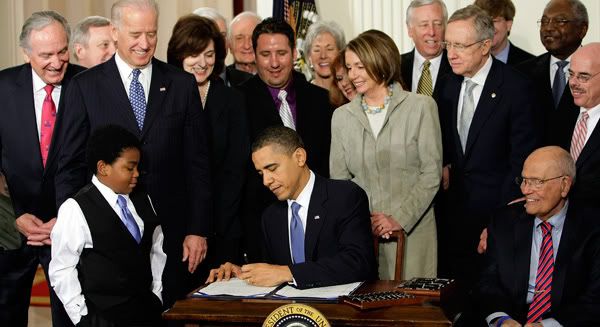
Four years ago, this happened

On March 23, 2010, President Barack Obama signed the Affordable Care Act into law. For over 60 years, Democrats had been trying to pass a law that finally and firmly declared that health care was a right and not a privilege.

This historic piece of legislation was possible because we had Democratic majorities in both houses of Congress and a Democratic president.

It is why Elections Matter … and why all the rest is noise.

On Behalf of My Mother:

Today, I’m signing this reform bill into law on behalf of my mother, who argued with insurance companies even as she battled cancer in her final days.

I’m signing it for Ryan Smith, who’s here today.  He runs a small business with five employees.  He’s trying to do the right thing, paying half the cost of coverage for his workers.  This bill will help him afford that coverage.

I’m signing it for 11-year-old Marcelas Owens, who’s also here.  (Applause.)  Marcelas lost his mom to an illness.  And she didn’t have insurance and couldn’t afford the care that she needed.  So in her memory he has told her story across America so that no other children have to go through what his family has experienced.  (Applause.)

I’m signing it for Natoma Canfield.  Natoma had to give up her health coverage after her rates were jacked up by more than 40 percent.  She was terrified that an illness would mean she’d lose the house that her parents built, so she gave up her insurance.  Now she’s lying in a hospital bed, as we speak, faced with just such an illness, praying that she can somehow afford to get well without insurance.  Natoma’s family is here today because Natoma can’t be.  And her sister Connie is here.  Connie, stand up.  (Applause.)

I’m signing this bill for all the leaders who took up this cause through the generations — from Teddy Roosevelt to Franklin Roosevelt, from Harry Truman, to Lyndon Johnson, from Bill and Hillary Clinton, to one of the deans who’s been fighting this so long, John Dingell.  (Applause.)  To Senator Ted Kennedy.  (Applause.)  And it’s fitting that Ted’s widow, Vicki, is here — it’s fitting that Teddy’s widow, Vicki, is here; and his niece Caroline; his son Patrick, whose vote helped make this reform a reality.  (Applause.)

I remember seeing Ted walk through that door in a summit in this room a year ago — one of his last public appearances.  And it was hard for him to make it.  But he was confident that we would do the right thing.

Our presence here today is remarkable and improbable.  With all the punditry, all of the lobbying, all of the game-playing that passes for governing in Washington, it’s been easy at times to doubt our ability to do such a big thing, such a complicated thing; to wonder if there are limits to what we, as a people, can still achieve.  It’s easy to succumb to the sense of cynicism about what’s possible in this country.

But today, we are affirming that essential truth — a truth every generation is called to rediscover for itself — that we are not a nation that scales back its aspirations.  (Applause.)  We are not a nation that falls prey to doubt or mistrust.  We don’t fall prey to fear.  We are not a nation that does what’s easy.  That’s not who we are.  That’s not how we got here.

And we have now just enshrined, as soon as I sign this bill, the core principle that everybody should have some basic security when it comes to their health care.  (Applause.)  And it is an extraordinary achievement that has happened because of all of you and all the advocates all across the country

~

That bill was passed by Democrats. Not “perfect Democrats”. Democrats. A group of men and women, many of whom put their jobs on the line (and lost them in 2010) because they believed in the core principles of the Democratic party.

Let’s give President Obama Democratic majorities in the 114th Congress to advance the rest of his (and our) agenda in 2015.

When we vote, we win. And when we win, this becomes possible:

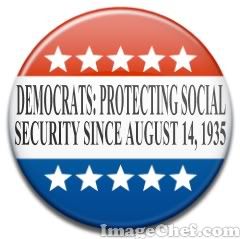
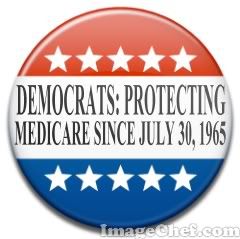
That looks pretty nice alongside these other reminders of why Elections Matter:


Republicans would like to repeal these, too.


Sunday All Day Check-in for the Herd

  Make sure you let your peeps

  know where to find you!  


    PLEASE Do Not Recommend the check-in diary!
   

        Fierces on the Weather Critter Comment are obligatory welcome.

The morning check-in is an open thread posted to give you a place to visit with the meeses. Feel free to chat about your weather, share a bit of your life, grump (if you must), rave (if you can). The diarist du jour sometimes posts and runs, other times sticks around for a bit, often returns throughout the day and always cares that meeses are happy … or at least contented.

On weekends (and holidays), you may find the check-in thread earlier or later than normal because … it is the weekend! Moosies need their beauty rest:

For those new to the Moose, Kysen left a Moose Welcome Mat (Part Deux) so, please, wipe your feet before you walk in the front door start posting.

The important stuff to get you started:

– Comments do not Auto-refresh. Click the refresh/reload on your tab to see new ones. Only click Post once for comments. When a diary’s comment threads grow, the page takes longer to refresh and the comment may not display right away.

– To check for replies to your comments, click the “My Comments” link in the right-hand column (or go to “My Moose”). Comments will be listed and a link to Recent Replies will be shown. (Note: Tending comments builds community)

– Ratings: Fierce means Thumbs Up, Fail means Thumbs Down, Meh means one of three things: I am unFailing you but I can’t Fierce you, I am unFiercing after a mistaken Fierce … or Meh. Just Meh. (p.s. Ratings don’t bestow mojo, online behaviour does).

– The Recommended list has a prominent place on the Front Page because it reflects the interests of the Moose. When people drive-by, we want them to see what we are talking about: news, politics, science, history, personal stories, culture. The list is based on number of recs and days on the list. Per Kysen: “The best way to control Rec List content is to ONLY rec diaries you WANT to see ON the list.

– Finally, the posting rules for a new diary: “Be excellent to each other… or else

(Some other commenting/posting/tending notes for newbies can be found in this past check-in and, of course, consult Meese Mehta for all your questions on meesely decorum.)

You can follow the daily moosetrails here: Motley Moose Recent Comments.

~

Let the greetings begin!

~