Motley Moose – Archive

Since 2008 – Progress Through Politics

The Daily F Bomb, Monday 1/27/14

Interrogatories

What is the most exotic place you have been?

What is your least favorite animal and why?

Did you ever hidden something then forget where you hid it?

The Twitter Emitter

On This Day

In 1888, the National Geographic Society was founded in Washington, D.C..

In 1951, nuclear testing began at the Nevada Test Site with a one-kiloton bomb dropped on Frenchman Flat.

In 1967, astronauts Virgil I. “Gus” Grissom, Edward H. White and Roger B. Chaffee died in a flash fire during a test aboard their Apollo 1 spacecraft at Cape Kennedy, Florida.

In 1967, more than 60 nations signed a treaty banning deployment of nuclear weapons in space, and limiting use of the Moon and other celestial bodies to peaceful purposes..

In 1973, the Vietnam peace accords were signed in Paris.

In 1998, then First lady Hillary Rodham Clinton, appearing on NBC’s Today show, said that allegations against her husband were the work of a “vast right-wing conspiracy.”

In 2006, Western Union delivered its last telegram.

In 2010, Apple CEO Steve Jobs unveiled the iPad tablet computer during a presentation in San Francisco.

Born on This Day

1585 – Hendrick Avercamp, Dutch painter (d. 1634)

1630 – Job Adriaenszoon Berckheyde, Dutch painter (d. 1693)

 photo JobAdriaenszoonBerckheyde.jpg

1645 – Michiel van Musscher, Dutch painter (d. 1705)

 photo MichielvanMusscher.jpg

1679 – Jean-François de Troy, French painter and tapestry designer (d. 1752)

1756 – Wolfgang Amadeus Mozart, Austrian composer (d. 1791)

1805 – Samuel Palmer, English artist (d. 1881)

 photo SamuelPalmer.jpg

1824 – Jozef Israëls, Dutch genre painter (d. 1911)

1826 – Carlos de Haes, Spanish landscape painter (d. 1898)

1832 – Arthur Hughes, English Pre-Raphaelite painter (d. 1915)

 photo ArthurHughes.jpg

1832 – Lewis Carroll, English author (d. 1898)

1841 – Arkhip Kuindzhi, Russian painter (d. 1910)

1850 – John Collier, English painter (d. 1934)

 photo JohnCollier.jpg

1850 – Samuel Gompers, American labor leader (d. 1924)

1850 – Edward J. Smith, English captain of the RMS Titanic (d. 1912)

1874 – Harold Knight, British painter (d. 1961)

1885 – Jerome Kern, American composer (d. 1945)

1885 – Maeda Seison, Japanese painter (d. 1977)

 photo MaedaSeison.jpg

1908 – William Randolph Hearst, Jr., American newspaper magnate (d. 1993)

1918 – Elmore James, American blues musician (d. 1963)

1921 – Donna Reed, American actress (d. 1986)

1926 – Ingrid Thulin, Swedish actress (d. 2004)

1930 – Bobby Blue Bland, American singer (d. 2013)

1936 – Troy Donahue, American actor (d. 2001)

1940 – James Cromwell, American actor

1942 – Kate Wolf, American folk singer and songwriter (d. 1986)

1944 – Nick Mason, English drummer (Pink Floyd)

1948 – Mikhail Baryshnikov, Russian ballet dancer

1951 – Brian Downey, Irish drummer (Thin Lizzy)

1954 – Ed Schultz, American radio and television political talk show host

1955 – John G. Roberts, American jurist and the 17th Chief Justice of the United States

1959 – Keith Olbermann, American political commentator

1961 – Gillian Gilbert, British musician (New Order and The Other Two)

1961 – Margo Timmins, Canadian singer (Cowboy Junkies)

1964 – Bridget Fonda, American actress

1965 – Alan Cumming, Scottish actor

1968 – Mike Patton, American singer-songwriter (Faith No More)

1969 – Patton Oswalt, American actor and writer

Died on This Day

1595 – Sir Francis Drake, English explorer (b. c.1540)

1651 – Abraham Bloemaert, Dutch painter and printmaker in etching and engraving (b. 1566)

1669 – Gaspar de Crayer, Flemish painter and draftsman (b. 1584)

1811 – Jean-Baptiste Huet I, French Rococo animal painter and engraver (b. 1735)

 photo Jean-BaptisteHuetI.jpg

1812 – Captain John Perkins, first black commissioned officer in the Royal Navy

1836 – Ludwig Philipp Strack, German landscape painter (b. 1761)

1901 – Giuseppe Verdi, Italian composer (b. 1813)

1910 – Thomas Crapper, English inventor (b. 1836)

1927 – Luigi Pastega, Italian genre painter (b. 1858)

 photo LuigiPastega.jpg

1972 – Mahalia Jackson, American singer (b. 1911)

1986 – Lilli Palmer, German-born actress (b. 1914)

Lilli Palmer Tippling even more photo LilliPalmertipplingagain.jpg

1993 – André the Giant, French professional wrestler and actor (b. 1946)

2004 – Jack Paar, American television show host (b. 1918)

2007 – Tige Andrews, American actor (b. 1920)

2009 – John Updike, American novelist (b. 1932)

2010 – Zelda Rubinstein, American actress (b. 1933)

2010 – J. D. Salinger, American novelist (b. 1919)

2010 – Howard Zinn, American historian and activist (b. 1922)

Today is

International Holocaust Remembrance Day

Chocolate Cake Day

Punch the Clock Day


Motley Monday Check in and Mooselaneous Musings

 photo Monday3_zpsc08d979e.jpg

  Good morning Motley Meese! Hope your weekend was lovely.


  PLEASE Don’t Recommend the check-in diary!
 

        Fierces on the weather jar comment are still welcome.

The check-in is an open thread and general social hour. Come back when time allows through the day – the conversation continues.

It’s traditional but not obligatory to give us a weather check where you are and let us know what’s new, interesting, challenging or even routine in your life lately. Nothing is particularly obligatory here except:

Always remember the Moose Golden (Purple?) Rule:

Be kind to each other… or else.

What could be simpler than that, right?

 photo Mondayscoming_zps3a5b268f.jpg


Odds & Ends: News/Humor

I post a weekly diary of historical notes, arts & science items, foreign news (often receiving little notice in the US) and whimsical pieces from the outside world that I often feature in “Cheers & Jeers”. For example …..

SEPARATED at BIRTH – film stars Michelle Williams (Brokeback Mountain, Blue Valentine) and Adelaide Clemens (X-Men Origins: Wolverine, The Great Gatsby).


OK, you’ve been warned – here is this week’s tomfoolery material that I posted.

ART NOTES – works by wildlife artist Bob Kuhn in an exhibition entitled Drawing on Instinct are at the Tucson, Arizona Museum of art through February 16th.

BRAIN TEASER – try this Quiz of the Week’s News from the BBC.

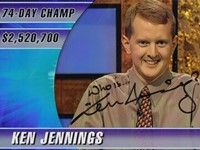
THE OTHER NIGHT yours truly hosted the Top Comments diary with a look at the record-setting run on the quiz show Jeopardy! by a then 30 year-old Ken Jennings – which happened nearly ten years ago(!) – and what he is up to now.

WEDNESDAY’s CHILD is Trigger the Cat – a hero kitteh who saved the life of a 75 year-old Missouri woman (who was having a stroke and unable to speak) by meowing loud enough to awaken the woman’s sleeping daughter.

CHEERS to seeing that African women are making great strides in politics and business, in a part of the world where old men still rule most of its governments.

THURSDAY’s CHILD is Chequers the Cat – an English hero kitteh who started following (and meowing loudly) … a neighbor who wondered why … and then went into cardiac arrest .. and credits the cat for alerting him to impending danger.

THERE WERE MANY PRIOR references to the Boys from Brazil – but this story chronicles a major farm in that country which (during the 1930’s) was owned by a family in league with Fascists …. and thus were sympathetic to the Nazis.

FRIDAY’s CHILD is Taffy the Cat – a Welsh hero kitteh who awakened a woman whose smoke detector went off (and ignored it, believing it to be the alarm clock) by biting her hand … until she awoke and called firefighters (and there is now a suspect in custody … for suspected arson).

IN THE RUN-UP to the 100th anniversary this summer of the beginning of World War I …. the BBC has a series of profiles on major European capitals as they were (w/photos) in 1914 …… and this profile is of Vienna – where (just a year earlier), its residents included Adolf Hitler, Leon Trotsky, Carl Jung, (Marshal) Joseph Tito, Sigmund Freud and Joseph Stalin.

Surprising, later-in-life SEPARATED at BIRTH? – TV journalist and host Jane Pauley as well as Hillary Clinton the former Senator and Secretary of State.


……and finally, for a song of the week …………… one of the 1960’s sunshine pop groups that went through an interesting ebb-and-flow not only in popularity – but also in their music – was Spanky and Our Gang – whose sound went from vocal-jazz to folk/rock to pop … and back again to blues and jazz. The All-Music Guide’s Bruce Eder notes that they aren’t as well-remembered as icons like the Mamas & Papas due to a more obscure public persona (and lesser songwriting ability) – but they had just as rich harmonies and as much influence on the sound of the mid-to-late 60’s as anyone else.

Their story begins with the Peoria, Illinois native Elaine McFarlane joining the jazz-blues Jamie Lyn Trio in 1962. But this style was in a down-phase at that time, and so she joined the Chicago-based New Wine Singers (with trombonist Malcolm Hale) whose mix of folk/protest-songs and … Dixieland jazz might seem comical today but it was definitely contemporary .. (well, for awhile).

By 1965 McFarlane had left for a Florida vacation where she met guitarist Nigel Pickering and bassist Paul “Oz” Bach at a hurricane party (waiting one out). Their jug band sound was appealing to McFarlane enough that she invited them to join her at Chicago’s Mother Blues club where she was a singing waitress.

Later that year, the club’s owner Curly Tait needed an opening act for out-of-town bands. Pickering and Bach did join her but – with a lack of material – they added comedy sketches to their folk songs, a common practice of the day. McFarlane’s old band mate Malcolm Hale joined (this time on guitar) but what about a band name? Elaine McFarlane had been nicknamed “Spanky” as it was said she resembled (and had a similar last name as) George “Spanky” McFarland of the “Our Gang” comedy shorts … and that was the name that stuck. With club owner Curly Tait as their manager, the group eventually got work at larger clubs and caught the crest-of-a-wave that was the 1965-1966 folk rock movement (as exemplified by The Byrds).

Eventually they caught the eye of Chicago-based Mercury Records, who signed the band in late 1966 and assigned them the talented producer Jerry Ross. Adding drummer John Seiter, they went straight into the charts as a result of their first recording session: with a song that had been rejected by both the Mamas and Papas as well as the Left Banke (of “Walk Away, Renée” fame). Sunday Will Never Be the Same was co-written by Terry Cashman (of “Talking Baseball” fame) as a ballad – but Malcolm Hale revamped the song and its intro, and it wound up at #9 on the charts during the Summer of Love.

Two other songs charted from their self-titled debut album: “Making Every Minute Count” and also Lazy Day – which seems to re-emerge each summer on the radio, doesn’t it?. Their harmonies clicked, and producer Jerry Ross pulled out all of the stops in harnessing their sound.

In early 1968 bassist Oz Bach left the group, replaced by Kenny Hodges (who brought along guitarist Lefty Baker). The band also decided to replace producer Jerry Ross, desiring a more sophisticated sound. They settled upon songwriter/producers (for the Chad Mitchell Trio) Stuart Scharf and especially Bob Dorough (much more famous as a jazz pianist/vocalist).

Their next album Like to Get to Know You was released in the summer of 1968. The change in producers had an effect; there were elements of blues and jazz – including a version of “Stardust” that is said to have been an inspiration for the soon-to-be-formed Manhattan Transfer. But there was the same result in hit songs: “Sunday Morning” reaching #30 and the title track reaching #17.

And there was also a cover of the Fred Neil song Everybody’s Talkin’ – soon to be the title song of the film Midnight Cowboy and a major hit for Harry Nilsson the following year. This sounds like a “Behind the Music” plot twist: but it proved to be the band’s high-water mark.

In late 1968, they gathered to record their third album. Scharf and Dorough had written some sophisticated tunes and complex arrangements – but which necessitated using session musicians for much of the album. And while critically acclaimed, the album lacked an obvious hit single (except for one which had a drawback, as will be noted later) and thus suffered from poor sales. McFarlane was pregnant and considering leaving the band, and drummer John Seiter had been offered the drummer’s chair in The Turtles. Finally, guitarist Malcolm Hale died in October of carbon monoxide poisoning (due to a faulty space heater).

Shaken, the band reassessed its future and decided not to continue – and thus they completed the album Without Rhyme or Reason and fulfilled their concert obligations by early 1969. Two years later, everyone was surprised to learn of the release of the album Spanky & Our Gang Live which dated back in 1967, in an early incarnation of the band.

Spanky and Our Gang briefly reunited in 1975 for a country-tinged album Change before calling it a day and some (and McFarlane especially) embarking on solo careers.

In 1999, a reunion concert was held in Florida, with Spanky McFarlane accompanied by Nigel Pickering and Kenny Hodges. Not able to participate was Oz Bach – who died of cancer a year earlier – and guitarist Lefty Baker (who died back in 1971).

The band’s 1999 Greatest Hits compilation offers a good overview of the band’s career.

In 2009, Spanky McFarlane and Nigel Pickering released the first Spanky and Our Gang album in thirty-four years, Back Home Americana, Vol. 1 before the death of Nigel Pickering in 2011 (at age 81) … and Kenny Hodges last year (at age 76) … with drummer John Seiter now the last of Spanky McFarlane’s surviving bandmates from the ’60’s.

Spanky McFarlane turns age 72 this coming June, and performed a show as “Spanky & Our Gang as recently as two years ago – albeit with no members from the original band. So there may be more from the band of this name, yet.

As mentioned earlier, what might have been a hit single from (what proved to be) the original band’s last album …. was one written by their producers Dorough & Scharf – Give A Damn – had trouble getting airplay for two reasons: in the summer of 1968 the word “damn” caused the song to be banned in parts of the country, and (b) its commentary of racial equality made it unpalatable in certain areas, too.

The band performed it on the Smothers Brothers show, and among the complaints that CBS received – according to Tom Smothers – one came from Richard Nixon. Interestingly, in 1969 John Lindsay used the song as part of his (successful) re-election campaign as New York City’s mayor.

And at this link you can listen to it.

If you’d take the train with me

uptown, through the misery

of ghetto streets in morning light

it’s always night

Take a window seat, put down your Times

You can read between the lines

Just meet the faces that you meet

beyond the window’s pane

And it might begin to teach you

how to give a damn about your fellow man

And it might begin to reach you

how to give a damn about your fellow man


Marching Forward Together: from Selma to Raleigh


 photo MoralMarchonRaleigh_zps28ea067a.jpg

It has been a long march since the days when civil rights activists came together in Selma Alabama in 1965 to further focus the nation’s and the world’s eyes on the injustices and degradations heaped upon those of us who are of a darker hue than the majority.

Immorally deprived of our rights-to vote, to economic equality, to share public spaces, to live lives free from fear and intimidation from racist segregationists, we built a mighty coalition of blacks, whites and browns, men and women-in the era which became known as “the Civil Rights Movement.” It is spoken of as “history” as if the battle was won and ended-with racism defeated and social and political injustices vanquished. Yes, we won battles, yes we got new legislation-like the Civil Rights Act of 1964-and of those victories we can be proud.  

But the war is not won-yet.

Some of the early voices have been silenced-by assassination-like those of the Rev. Dr. Martin Luther King Jr. and Malcolm X, though their words and deeds ring on in a clarion call for justice. Other powerful voices passed into the arms of death like Mrs. Fannie Lou Hamer and Rev. Fred L. Shuttlesworth, having fought the righteous fight-aware they had passed on the torch to a younger generation.

Rising up out of the south which birthed the first movement are new voices, meshed with those of veterans of earlier struggles.

This powerful movement is growing stronger day by day.

Next stop on the justice train is Raleigh, North Carolina, where a massive demonstration will be held on February the 8th.  

 photo HKonJ2013_zpsc87c41b8.jpg

Forward Together, Moral Monday, The Historic Thousands on Jones Street (HKonJ) has grown up and out from North Carolina, moved to South Carolina as Truthful Tuesday, and it has spread to become Moral Monday Georgia as well.

The call is out for everyone of faith, of conscience, of good will, to rise up once again and move forward together to demand our rights to live in a just and equitable society, stripped of racism, sexism, homophobia and economic inequality.

We have recently mourned, honored the accomplishments of and celebrated the birthday of Rev. Dr. Martin Luther King Jr., one of the most powerful voices and leaders of the movement.

Though he was vilified, persecuted by J. Edger Hoover and a day in his honor was resisted, he clearly holds a place in history as a shining beacon for justice and equality for humanity.

They have tried to silence mighty voices, but new ones always rise up in their stead.  

One of the most powerful voices today is that of Rev. Dr. William Barber-head of the North Carolina NAACP, and a leader of this growing movement.

Back in 2012, I watched a live stream of the NAACP National Convention, which was held in Houston, Texas. Republican presidential candidate Mitt Romney showed up. He received a polite, but lukewarm welcome, and then some boos. I continued viewing. Romney was followed by a man I had never heard before.

I sat listening, and after his introduction, when he began to speak and preach, the hair literally stood up on my arms. The people at the convention were lifted up out of their seats cheering wildly. I rushed to try to find a video I could use to share this man with readers here, who I knew were probably not watching the live stream.

I posted a rushed diary, and a Daily Kos member, dewtex, was able to grab most of the live stream and make it into a video. Meanwhile, TrueBlueMajority, stayed up into the wee hours to write out a transcript. I updated the diary, and since that time another video has been made of Rev. Barber’s speech “If we ever needed to vote” which has circulated on the Internet, but if you have never listened to it, I urge you to do so now, followed the next year by his “Old South vs. New South: The 3rd Reconstruction,” part of Annabel Park’s “Story of America Project.”  

I have heard many movement activists speak and preach in my 66 years on this planet. From Paul Robeson (my earliest memory) to Harry Belafonte, Dr. King, Fred Hampton, Malcolm X, Mrs. Hamer, Stokely Carmichael, John Lewis, James Forman, Cesar Chavez and Dolores Huerta, Reies Tijerina, Yuri Kochiyama, Felipe Luciano, Amiri Baraka, Russell Means, John Trudell and Daniel Berrigan … in the streets, at rallies, and in Congress like the powerful voice of Barbara Jordan.

I have never been as moved by spirit as that first time hearing Rev. Barber. After searching for more about him and his work in NC, I couldn’t understand why more of us on the left weren’t paying attention to this man and those he was working alongside. I later contacted Dr. Barber, and his associate, longtime activist and veteran civil rights attorney Al McSurely, and after gathering as much information as I could I started writing about him, and this movement, as did other writers. Though the national media wasn’t focused, bloggers began to listen and take note.

Bill Moyer’s selected him as “an activist to watch.”

His NAACP bio, doesn’t tell the whole story since no words on paper can convey his ability to speak to the hearts and minds of people and move them to organize.  

 photo TruthfulTuesdayprotester_zps365efee2.jpg

(photo: Peggy Franklin)

He has been making the news in southern papers:  

COLUMBIA, SC – In a speech of fire and thunder Sunday evening, one of today’s best-known civil rights activists denounced what he said was narrow-minded political and religious thinking that has “put extremism on steroids.”

“We must not give up the so-called high moral ground to the right-wing extremists,” said the Rev. William Barber II, 50, president of the N.C. NAACP, to about 300 at Zion Baptist Church in downtown Columbia.

Issues such as voting, health care, environment and education “are moral issues, faith issues,” Barber said in a pre-Martin Luther King Jr. Day speech to Columbia and S.C. NAACP members and guests.

“Any profession of faith that doesn’t promote justice and standing against wrong is a form of heresy,” said Barber, adding that pastors who obsess about topics like prayer, homosexuality and abortion while neglecting justice, poverty, fair play and equality issues “are just running their mouths.”

Rev. Barber has taken on conservatives on every issue, and his support of marriage equality and LBGT rights surprised many on the left who tend to write off all evangelicals as right wing. Hear him preach on this.

Well, listen or not, pay attention or not, the movement is growing day by day, arrest by arrest, demonstration by demonstration.

Look at the coalition they have formed.

Listen to the voices of women in “Ain’t I a Woman?!”, a promo just released for the upcoming march.


Come to Raleigh in 2014!

Help us move forward together.

You can distribute flyers.

You can put a banner on your facebook page.

Spread the word. Organize a Moral Monday.

Donate.

And if you can-join the march.

(cross-posted from Daily Kos)


Sunday All Day Check-in for the Herd

  Make sure you let your peeps

  know where to find you!  


    PLEASE Do Not Recommend the check-in diary!
   

        Fierces on the Weather Critter Comment are obligatory welcome.

The morning check-in is an open thread posted to give you a place to visit with the meeses. Feel free to chat about your weather, share a bit of your life, grump (if you must), rave (if you can). The diarist du jour sometimes posts and runs, other times sticks around for a bit, often returns throughout the day and always cares that meeses are happy … or at least contented.

On weekends (and holidays), you may find the check-in thread earlier or later than normal because … it is the weekend! Moosies need their beauty rest:

For those new to the Moose, Kysen left a Moose Welcome Mat (Part Deux) so, please, wipe your feet before you walk in the front door start posting.

The important stuff to get you started:

– Comments do not Auto-refresh. Click the refresh/reload on your tab to see new ones. Only click Post once for comments. When a diary’s comment threads grow, the page takes longer to refresh and the comment may not display right away.

– To check for replies to your comments, click the “My Comments” link in the right-hand column (or go to “My Moose”). Comments will be listed and a link to Recent Replies will be shown. (Note: Tending comments builds community)

– Ratings: Fierce means Thumbs Up, Fail means Thumbs Down, Meh means one of three things: I am unFailing you but I can’t Fierce you, I am unFiercing after a mistaken Fierce … or Meh. Just Meh. (p.s. Ratings don’t bestow mojo, online behaviour does).

– The Recommended list has a prominent place on the Front Page because it reflects the interests of the Moose. When people drive-by, we want them to see what we are talking about: news, politics, science, history, personal stories, culture. The list is based on number of recs and days on the list. Per Kysen: “The best way to control Rec List content is to ONLY rec diaries you WANT to see ON the list.

– Finally, the posting rules for a new diary: “Be excellent to each other… or else

(Some other commenting/posting/tending notes for newbies can be found in this past check-in and, of course, consult Meese Mehta for all your questions on meesely decorum.)

You can follow the daily moosetrails here: Motley Moose Recent Comments.

~

Let the greetings begin!

~


Ten years later – the Ken Jennings story

A look at a game-show contestant (with an interesting background) who became a cultural phenomenon ten years ago …..

Ten years ago this coming autumn, reports began to speak of someone in the news, who was … a quiz show contestant. That isn’t unprecedented, as the story of Charles Van Doren – who broke a nearly 50-year silence a few years back in an essay in the New Yorker – was big news in the 1950’s, as told in the film Quiz Show in 1994. More recently (in 1999), the first contestant to win the grand prize on Who Wants to Be a Millionaire went through his fifteen questions without using any lifelines … until the final question, when he phoned his father … merely to tell him he actually didn’t need his help, but wanted him to know he was about to win a million … which was replayed on news shows, too.

But the story of Ken Jennings may be the most compelling: for his unusual background, that someone you’d expect to be a Republican isn’t, and his likeable, boy-next-door disarming manner. Before looking at his rise to stardom, a look at what got him there.

—————————————————————————————

Ken Jennings was born in May, 1974 in Edmonds, Washington (and after years living elsewhere, he lives in the greater Seattle region today). As his father worked for international firms, Ken spent several of his early years living in South Korea and Singapore. (Crucially, he watched Jeopardy! on the Armed Forces television network). A member of the Mormon Church, he graduated from Brigham Young and was a software engineer for a Utah firm as he turned age thirty in the spring of 2004.

Jeopardy! was the brainchild of television host Merv Griffin, whose other business holdings (real estate, syndication, hotels, etc.) made him far wealthier than any of his TV shows ever did. In my youth it ran during the daytime, hosted by the unflappable Art Fleming – who bantered with his guests while offering clues worth ….. $10 and up ($20 and up in Double Jeopardy!) in those 1960’s days – when prize money was small as a result of the 1950’s quiz show scandals (especially those offering huge prizes for the era). The stand-up comic Robert Klein appeared on one of the celebrity shows and got off to a bad start. How bad? At the first commercial break, he joked that Art Fleming recounted the scores, saying something like “Phyllis Newman, $450, So-and-So, $120, Robert Klein: just watching”. (He did say he got back into the game and had a wonderful time).

After a five-year hiatus (1979-1984) off-the-air, Merv Griffin brought the syndicated show back … this time to the early evening slot after the TV network news, yet before prime time began. It is often preceded by (or followed by) Wheel of Fortune – and I recall a stand-up comic saying networks should show Wheel first (before Jeopardy!. Imagine, he said, watching people on Jeopardy! fighting to respond to Norse mythology … then watching someone on Wheel saying “Stitch in time saves …… gee, I don’t know … beef? Can I buy a vowel?” (Point taken).

But one rule of the show from its inception until the beginning of the 2003-2004 season (from September to June) was: contestants who won that day’s match and thus came back (to face two new challengers) were limited to five appearances. If they achieved that pinnacle: they retired as an undefeated champion (although they would later return to participate in periodic Tournaments of Champions).

But at the beginning of the 2003-2004 season, the five-time rule was eliminated: whoever wins that day’s match, you keep coming back until someone beats you. In the several months before Jennings arrived on the show in June, 2004, no one had won more than eight matches. And in fact, Ken Jennings almost did not win Match #1. His Final Jeopardy question Who is Jones? – referring to the athlete Marion Jones – could have been disallowed for ambiguity. But the favorable ruling  on his response was a reflection on the lack of news reporting on female athletes … that who else could it be? And so he was champion when the season ended later that June, and picked-up at the beginning of the new season in September.

And how. Ken Jennings kept on winning, winning and winning. And that’s when he became a celebrity, mentioned not only on shows like Entertainment Tonight, but also the evening news. I recall one clip of Jay Leno making a joke about George W. Bush needing to replace an adviser who had left the Administration … and the audience responding when he suggested Ken Jennings for the job. The producers of Jeopardy were happy, as their ratings were up 22% from the previous year.

There were some lighter moments along the way, as for example this clip where he gave a racy response to one clue (earning a smiling rejoinder from host Alex Trebek). The other contestant who (eventually) gave the correct answer …. had the same thought, too.

Still, I rarely tuned-in to the show (even though I watched it in my youth and did so from time-to-time in recent years) as I am often not home when it’s on and just couldn’t bring myself to record it. And so I waited for news of the end of his reign … as his combined winnings now exceeded $2-1/2 million.

And finally that autumn, it did happen (which rumors spread that “tonight would be the night”). Ken Jennings had a streak of 74 wins in a row, with all but nine of them being clinched even before Final Jeopardy. I watched Match #75, and he missed both Daily Doubles. Still, he had a lead going into Final Jeopardy (14,400 vs. 10,000) of his only eligible challenger, Nancy Zerg. (The other contestant had a negative score and was eliminated from the match).

And here is the 2-minute clip of the end of his 74-game winning streak in Final Jeopardy.

Nancy Zerg, as it turned out, lost her next match … but had that one shining moment. H&R Block not only didn’t mind Jennings not guessing them …. they capitalized on their new-found notoriety by offering Ken Jennings free services for the rest of his life. Among the many celebrity appearances he made was on ABC’s Live with Regis and Kelly ….. and telling Regis Philbin that – when Regis was the host of Who Wants to Be a Millionaire – he, Ken Jennings …….. had failed to qualify for that show.

The producers of Jeopardy, though, were concerned about the fairness of having Ken Jennings be the show’s all-time leader … when so many prior champions were limited to five appearances. And so later that year, they scheduled a 75-match Ultimate Tournament of Champions – with 145 players from the past twenty years, competing for a $2 million first prize. And Ken Jennings finished second to a prior champ Brad Rutter – who became the show’s new all-time earnings leader. Both appeared against the IBM Watson computer six years later (and lost). With winnings from appearances on other quiz shows, Ken Jennings is the all-time money-winner (over $3 million) in cumulative quiz show appearances.

He is the author of four books (including Brainiac which is partly his life story and partly a look at trivia in general). He has been a guest host/producer of other trivia shows, won a “top rookie” in the one crossword puzzle competition he competed in, and says that when he is introduced to new people: is wary that they will try to stump him.

When you know of his Mormon background and clean-cut appearance, many people assume that he is a Republican – but is in fact a Democrat. He laughed that when he was recruited (by both Harry Reid and Chuck Schumer) to be a Democratic candidate for the US Senate seat held by Orrin Hatch … he knew 2004 would be a bad year for the Democratic Party.

One place that you can run into him is in the Sunday newspaper magazine Parade – where he has a Kennections weekly feature. This asks five questions about general news/culture ….. and the five answers together help you ask “What is the Kennection?” (amongst the five responses). In addition, he runs an interactive news quiz on Slate each week.

Ken Jennings turns age 40 later this year, and just came out with a series of children’s quiz books ….. and one suspects there’ll be more where that came from.


Weekly Address: President Obama – Taking Action to End Sexual Assault

From the White House – Weekly Address

In his weekly address, President Obama said that the Administration has taken another important step to protect women at college by establishing the White House Task Force on Protecting Students from Sexual Assault. An estimated 1 in 5 women is sexually assaulted at college, and the President said that we will keep taking actions like strengthening the criminal justice system, reaching out to survivors, and changing social norms so that all Americans can feel safe and protected as they pursue their own piece of the American dream.

Transcript: Taking Action to End Sexual Assault

Hi, everybody.  This week, I called members of my Cabinet to the White House to deal with a challenge that affects so many families and communities – the crime, the outrage, of sexual violence.

Sexual assault is an affront to our basic decency and humanity.  And it’s about all of us – the safety of those we love most: our moms, our wives, our daughters and our sons.

Because when a child starts to question their self-worth after being abused, and maybe starts withdrawing… or a young woman drops out of school after being attacked… or a mother struggles to hold down a job and support her kids after an assault… it’s not just these individuals and their families who suffer.  Our communities – our whole country – is held back.

Over the past five years, we’ve stepped up our efforts stop these crimes.  And this week, we took another important step to protect young women at college.  An estimated 1 in 5 women is sexually assaulted at college – and that’s totally unacceptable.  So I’ve created the White House Task Force to Protect Students from Sexual Assault. We’re going to help schools do a better job of preventing and responding to sexual assault on their campuses.  Because college should be a place where our young people feel secure and confident, so they can go as far as their talents will take them.

And we’re going to keep working to stop sexual assaults wherever they occur.  We’ll keep strengthening our criminal justice system, so police and prosecutors have the tools and training to prevent these crimes and bring perpetrators to justice.  We’ll keep reaching out to survivors, to make sure they’re getting all the support they need to heal.  We’re going to keep combating sexual assault in our armed forces, because when a member of our military is attacked by the very people he or she trusts and serves with, that’s an injustice that no one who volunteers to protect our nation should ever endure.

Some of this is a job for government.  But really, it’s up to all of us.  We’ve got to teach young people – men and women – to be brave enough to stand up and help put an end to these crimes.  We’ve especially got to teach young men to show women the respect they deserve.  I want every young man in America to know that real men don’t hurt women.  And those of us who are fathers have a special obligation to make sure every young man out there understands that being a man means recognizing sexual violence and being outraged by it, and doing their part to stop it.

Perhaps most important, we need to keep saying to anyone out there who has ever been assaulted:  you are not alone.  We have your back.  I’ve got your back.

I’m going to keep pushing for others to step up – across my administration, in Congress, in state capitals, college campuses and military bases all across our country.  This is a priority for me, not only as President and Commander-in-Chief, but as a husband and a father of two extraordinary girls.  And I hope it’s a priority for you.  Because here in the United States of America, every man and woman, every girl and boy, has the right to be safe and protected and to pursue their own piece of the American dream.

Let’s all do our part to make it happen.  Thanks, and have a great weekend.

Bolding added.

~

Editor’s Note: The President’s Weekly Address diary is also the weekend open news thread. Feel free to leave links to other news items in the comment threads.


Saturday All Day Check-in for the Herd

  Make sure you let your peeps

  know where to find you!  


    PLEASE Do Not Recommend the check-in diary!
   

        Fierces on the Weather Critter Comment are obligatory welcome.

The morning check-in is an open thread posted to give you a place to visit with the meeses. Feel free to chat about your weather, share a bit of your life, grump (if you must), rave (if you can). The diarist du jour sometimes posts and runs, other times sticks around for a bit, often returns throughout the day and always cares that meeses are happy … or at least contented.

On weekends (and holidays), you may find the check-in thread earlier or later than normal because … it is the weekend! Moosies need their beauty rest:

For those new to the Moose, Kysen left a Moose Welcome Mat (Part Deux) so, please, wipe your feet before you walk in the front door start posting.

The important stuff to get you started:

– Comments do not Auto-refresh. Click the refresh/reload on your tab to see new ones. Only click Post once for comments. When a diary’s comment threads grow, the page takes longer to refresh and the comment may not display right away.

– To check for replies to your comments, click the “My Comments” link in the right-hand column (or go to “My Moose”). Comments will be listed and a link to Recent Replies will be shown. (Note: Tending comments builds community)

– Ratings: Fierce means Thumbs Up, Fail means Thumbs Down, Meh means one of three things: I am unFailing you but I can’t Fierce you, I am unFiercing after a mistaken Fierce, or Meh. Just Meh. (p.s. Ratings don’t bestow mojo, online behaviour does).

– The Recommended list has a prominent place on the Front Page because it reflects the interests of the Moose. When people drive-by, we want them to see what we are talking about: news, politics, science, history, personal stories, culture. The list is based on number of recs and days on the list. Per Kysen: “The best way to control Rec List content is to ONLY rec diaries you WANT to see ON the list.

– Finally, the posting rules for a new diary: “Be excellent to each other… or else

(Some other commenting/posting/tending notes for newbies can be found in this past check-in and, of course, consult Meese Mehta for all your questions on meesely decorum.)

You can follow the daily moosetrails here: Motley Moose Recent Comments.

~

Let the greetings begin!

~


Living Through the Little Rock Integration Crisis–1957

People of a certain age may remember September 1957, when nine black students were escorted to the “whites only” Little Rock Central High School in compliance with the landmark 1954 Supreme Court decision, Brown v. Board of Education. The ensuing crisis filled the national and international news for weeks. Who can forget the iconic photograph of 15-year-old Elizabeth Eckford, delicate as a summer blossom in her freshly ironed dress, clutching her schoolbooks as she walked past a crowd of bigots screaming at her?


Elizabeth Eckford photo littlerocknine_zps6614bdda.jpg


But there’s another Little Rock story, one that was never told. To read it, please follow me below the fold.

In September 1957 I was 13, a ninth-grader at West Side Junior High School.  My family lived in a duplex on Summit Street in Little Rock, three blocks from Central High. My father, Edward, worked for the Associated Press as an editor; my mother, Anne, like many women of the time, was a homemaker. My younger sister was a student at Centennnial Elementary, three blocks from our house in the other direction from Central High.

Like many teenagers I was too preoccupied with the day-to-day business of getting through the school week to pay much attention to current affairs. However, “current affairs” impinged themselves on the notice of all West Side students during recess on September 4, 1957, the first day of school.

We saw a convertible racing past our playground, with boys in the front seat and girls sitting on the folded-back roof, yelling “Two-four-six-eight, we ain’t gonna integrate!” This was followed by several other cars filled with students yelling the same words.

Soon after that armed troops arrived in the neighborhood. President Eisenhower had sent the 101st Airborne Division to Little Rock to enforce the law of the land.

Suddenly, my sister and I weren’t allowed to walk to school any more. My parents, who did not own a car, arranged for neighbors to drive us to school and back for the duration of the crisis. Outside the classroom my fellow students and I discussed the situation. Of course, they were all for segregation. Having been brought up in a household of freethinkers and having lived overseas for five of my 13 years, I didn’t share the prejudices of my classmates.

Nor did my parents. As my Uncle Jack, a retired journalist, wrote in his memoirs,

One bit of news that never made the national wires about Little Rock would no doubt have surprised most Americans. I know it surprised me in my first week in town. I went home with Ed one day after work as his wife, Anne, had invited me to dinner.  As we walked toward his front door a black postman was entering the house next door.

“Hello, Ed,” the postman said, waving.

“Hi, Bill,” Ed called back.

I asked, “Does he live there?” and Ed said yes, that such neighborhood integration was not all that uncommon.

“Then what in the hell are people here so upset about?  If they can live next door to blacks why can’t they go to school with them?”

“Who knows?” Ed shrugged.

It was one of those strange contradictions that I have never heard adequately explained.

The Johnsons were indeed our neighbors for four years, until we moved to another section of Little Rock. My mother and I used to chat with Mrs. Johnson as we hung our clothes to dry in the backyard. On the other side of the fence, Mrs. Johnson was doing the same thing. As a young teenager I was discovering that I liked to bake. I wanted to be just like my mother. Every time I made a cake and frosted it, I would cut two pieces, put them on a plate, and rush next door to the Johnsons’ house. “Mrs. Johnson, Mrs. Johnson,” I would say excitedly, “look what I just made!  Please try my cake!”

Mother, despite her upbringing in a part of the country not noted for liberal tendencies, was incapable of harboring race prejudice. To her, human beings were as beautiful and varied as seashells on a beach: they were people whose life stories she wanted to hear. When Mother left Texas she also left the church behind.  Religion continued to fascinate her, however, so despite her newfound atheism she investigated various faiths.  In Little Rock she joined the Bahai’s, who held meetings at members’ houses in the Little Rock area.

These meetings were my only chance to meet and talk to black children of my own age.  My sister Mary, three years younger than I, chased around with the other children, while I, more sedate, simply chatted.

Edward begged us not to reveal such activities to anyone outside our family.  “As an AP reporter I have to interview both sides,” he said. “On one day I may have to interview Daisy Bates and the next day I have to talk to someone on the other side. If either side knew what you were up to, it would make things difficult for me.”

Not that he didn’t take sides unobtrusively, in his own way. One day a young black reporter visited the AP offices, desperate to find a place to write his stories for The Minneapolis Tribune and a telephone to call them in. No one wanted to rent him any space. My father showed him to a desk with a telephone and a typewriter where he could work. Many years later that reporter, who had become the head of the U.S. Information Agency, remembered my father: when Edward came to Washington, DC, to look for a government job, Carl Rowan promised to expedite his application.

I’ve already mentioned in a previous diary how Edward single-handedly brought about the demise of the Arkansas Minutemen, a segregationist organization.  Here’s my Uncle Jack’s memory of that incident:


He [Ed] and all of us strived to give both integrationists and segregationists a fair hearing. This is a good time to say that if you are a reporter, your duty is to gather what facts you can, verify them the best you can, and report both sides of any controversy.  Fairness and objectivity, not opinion or bias, should be your guiding principle.

…To give you an example of being fair-scrupulously fair-to all, a small group of segregationists who called themselves the “Minutemen,” sent us a press release announcing their formation and denouncing a list of books as “subversive” and “dangerous” to America. Ed glanced over the list and then suddenly sat bolt upright in his chair-because the fourth book named on the list was The Diary of Anne Frank. How in the world could a book about a young Jewish girl who died in a concentration camp possibly be offensive?  

But Ed didn’t argue with the Minutemen, he treated them fairly, quickly knocking out a straightforward story on the group-and noting in the lead that it denounced The Diary of Anne Frank. As he handed the copy to the teletype operator, I noticed a sly smile on his face.  It wasn’t long before I knew why.

The story loosed a firestorm of protest against the Minutemen. State newspapers and broadcasters, politicians and the general public-including segregation sympathizers-cursed the Minutemen, called them Nazis and demanded that they be driven out of Arkansas. Shaken representatives of the group actually came to the AP bureau later and pleaded with Ed to do a follow-up story that would put them in a better light. Ed smiled again and said, “Sorry, we covered you already.”  The Minutemen sank from sight.  

Meanwhile, Mother continued to investigate the subject of religion. She became friends with Captain Roberts, an attractive young black woman in the Salvation Army. Captain Roberts came to our house for dinner on Friday nights, and she and Mother would argue for hours about the Bible and the meaning of different texts. Both enjoyed the exchanges but sometimes the captain despaired of Mother’s lack of belief.  Once she said to me, “You’re the only one I see any hope for!” because at the time I regularly attended church.

When Mother was recovering from an operation and therefore unable to do much housework, she employed people to help her. In the Little Rock of the 1950s domestic help was provided by black women. So far from behaving like the nasty white women in the popular novel, The Help, Mother became friends with the women who helped her, exchanging family stories and recipes.

One day it happened that I boarded a city bus and spied Betty (not her real name), a woman who had helped my mother, sitting in one of the seats.  Hailing her with delight, I went to sit beside her. I noticed she looked uncomfortable but in my teenaged self-absorption I didn’t stop to think why she might have looked that way. I merely thought, “Oh, good, here’s someone I know-now I’ll have someone to talk to!”

Sixty-odd years later, I can only hope she didn’t encounter any unpleasantness because of that.

In 1958, in order to save the pure, lily-white children of Little Rock from sitting in the same classroom with black students, Governor Orval Faubus closed the Little Rock public schools.  The seggies were pleased, but not so the students who were relying on attending accredited schools so they could get into college. For one semester I simply stayed at home. My father gave me a reading list and quizzed me on the books when he returned home in the evenings. (I liked most of the books, which ranged from The Odyssey to The Decameron, but fell asleep over three different translations of The Iliad, which I hated.) For the second semester of that year I attended a makeshift high school in a Baptist church. Fearful that the schools would remain closed during my junior year of high school, my parents scraped together the money to send me to St. Mary’s Academy, a private Catholic high school for girls. A couple of girls from Trinity Cathedral, where I went to church, attended along with me.

Five mornings a week we St. Mary’s students would get on the city bus to travel to school. At almost every stop, traditionally built black women, already looking tired from the humid Arkansas heat, would climb on to the bus too.  I’d immediately spring up and ask, “Ma’am, would you like to sit down?”

“Oh, thank you, honey,” would come the reply.”Would you like me to hold your books?”  

I wasn’t the only St. Mary’s student to give up her seat-we all did. We had quite a pleasant time chatting as the bus trundled down the public highway.

The following year I briefly attended Little Rock Hall High School. There were several black students in my senior class, and that was the only time I ever attended an integrated public school in this country. In October 1960 my family moved from Little Rock to Tulsa, Oklahoma.

In 1989 on our way to Texas to spend Christmas with relatives, my husband, teenaged son, and I stopped in Little Rock. Central High was still a beautiful school, and Trevor, my son, was fascinated by the architecture. The neighborhood I used to live in looked sad, with many boarded-up houses. West Side Junior High School was no longer a school but a community center. We spent the night at the North Little Rock Holiday Inn and ate dinner at the Inn’s restaurant. When I noticed that many black diners were being waited on by white servers, I realized that change had indeed come to Little Rock.

If you’ve borne with me thus far, thank you for reading this. I wanted to tell those who might doubt it that not everyone in the South was a narrow-eyed, mean-mouthed bigot and that change does happen, however slowly.

I only wish change didn’t involve pain and suffering on the part of the people who bring it about.


The Daily F Bomb, Friday 1/24/15

OMG, it’s almost 2015! January is almost over.

Interrogatories

It’s National Compliment Day! Say some nice things.

But, since it’s also Talk Like a Grizzled Prospector Day, try to say those nice things like a grizzled prospector might. (Why am I imagining early Walter Brennan?)

What is the best use of peanut butter?

Would you know a Justin Bieber song if it grabbed you by the throat and tried to strangle you?

The Twitter Emitter

On This Day

In 41, Evil Roman emperor Caligula was murdered by his Praetorian Guard, and his uncle Claudius installed in his place.

In 1848, the California Gold Rush started when James W. Marshall found gold at Sutter’s Mill.

In 1908, Robert Baden-Powell organized the first Boy Scout troop.

In 1924, Russia’s St. Petersburg got renamed Leningrad in honor of Vladimir Lenin.

In 1972, the Supreme Court struck down some state laws denying welfare benefits to with less that a year’s residence in that state.

In 2003, the Department of Homeland Security became an official thing upon the swearing in of Tom Ridge as Secretary.

Born on This Day

76 – Hadrian, Roman Emperor and wall builder (d. 138)

1544 – Gillis van Coninxloo, Flemish painter (d. 1607)

1670 – William Congreve, English playwright (d. 1729)

1705 – Farinelli, Italian castrato (d. 1782)

1836 – Gioacchino Toma, Italian painter (d. 1891)

 photo GiocchinoToma.jpg

1848 – Vasily Surikov, Russian painter (d. 1916)

1862 – Edith Wharton, American writer (d. 1937)

1864 – Marguerite Durand, French suffragette (d. 1936)

1872 – Konstantin Bogaevsky, Russian painter (d. 1943)

1883 – Estelle Winwood, English actress (d. 1984)

 photo estelle-winwood-with-bela-lugosi.jpg

1907 – Tuts Washington, American pianist (d. 1984)

1909 – Ann Todd, English actress (d. 1993)

1915 – Robert Motherwell, American painter (d. 1991)

1917 – Ernest Borgnine, American actor (d. 2012)

 photo ErnestBorgnine.jpg

1918 – Oral Roberts, American evangelist (d. 2009)

1924 – Joe Albany, American jazz pianist (d. 1988)

1925 – Maria Tallchief, American ballerina (d. 2013)

1936 – Doug Kershaw, American musician

1936 – Bobby Wellins, Scottish jazz saxophonist

1939 – Ray Stevens, American singer-songwriter

1941 – Neil Diamond, American singer

1941 – Aaron Neville, American singer (Neville Brothers)

1943 – Sharon Tate, American actress and Manson murder victim (d. 1969)

1944 – Klaus Nomi, German singer (d. 1983)

1945 – John Garamendi, American politician

1947 – Warren Zevon, American musician (d. 2003)

1949 – John Belushi, American actor (d. 1982)

1958 – Jools Holland, English keyboard player (Squeeze)

1961 – Nastassja Kinski, German-born actress

1967 – Mark Kozelek, American singer/songwriter (Red House Painters and Sun Kil Moon)

1971 – Andrea Mackris, American television producer who is “She Who Shall Not be Named” in Bill O’Reilly’s world.

Died on This Day

1665 – Carel van Savoyen, Dutch painter (b.1621)

1890 – Anton Hartinger, Austrian painter (b. 1806)

1914 – Adolf Eberle, German genre painter (b. 1843)

 photo AdolfEberle.jpg

1915 – Carl Haag, German orientalist painter (b. 1820)

 photo CarlHaag.jpg

1920 – Amedeo Modigliani, Italian painter and sculptor (b. 1884)

 photo AmedeoModigliani.jpg

1950 – Bull Montana, actor and wrestler (b. 1887)

1962 – André Lhote, French painter (b. 1885)

 photo Andre3010Lhote.jpg

1965 – Winston Churchill, soldier, politician, historian, Prime Minister of the United Kingdom and Nobel laureate (b. 1874) also a painter

1973 – J. Carrol Naish, American actor (b. 1897)

 photo JCarrolNaish.jpg

1979 – Mabel Taliaferro, American stage and silent film actress (b. 1887)

 photo MabelTaliaferro.jpg

1980 – Lil Dagover, Dutch-born German actress (b. 1887)

1983 – George Cukor, American film director (b. 1899)

1986 – L. Ron Hubbard, American writer and founder of Scientology (b. 1911)

1989 – Ted Bundy, American serial killer (b. 1946)

1990 – Madge Bellamy, American actress (b. 1899)

Madge Bellamy photo MadgeBellamyTippling.jpg

 photo MadgeBellamy.jpg

1993 – Thurgood Marshall, U.S. Supreme Court Justice (b. 1908)

1995 – Victor Reinganum, English artist and illustrator (b. 1907)

2006 – Fayard Nicholas, American tap dancer, one-half of The Nicholas Brothers (b. 1914)

2006 – Chris Penn, American actor (b. 1965)

2010 – Pernell Roberts, American actor & singer, last surviving star of Bonanza (b. 1928)

2012 – James Farentino, American actor (b. 1938)

Today is

Lobster Thermidor Day

National Peanut Butter Day

Eskimo Pie Patent Day

Belly Laugh Day

Beer Can Day

National Compliment Day

Talk Like A Grizzled Prospector Day