Fierces on the Weather Critter Comment are obligatory welcome.
The morning check-in is an open thread posted to give you a place to visit with the meeses. Feel free to chat about your weather, share a bit of your life, grump (if you must), rave (if you can). The diarist du jour sometimes posts and runs, other times sticks around for a bit, often returns throughout the day and always cares that meeses are happy … or at least contented.
For those new to the Moose, Kysen left a Moose Welcome Mat (Part Deux) so, please, wipe your feet before you walk in the front door start posting.
The important stuff to get you started:
– Comments do not Auto-refresh. Click the refresh/reload on your tab to see new ones. Only click Post once for comments. When a diary’s comment threads grow, the page takes longer to refresh and the comment may not display right away.
– To check for replies to your comments, click the “My Comments” link in the right-hand column (or go to “My Moose”). Comments will be listed and a link to Recent Replies will be shown. (Note: Tending comments builds community)
– Ratings: Fierce means Thumbs Up, Fail means Thumbs Down, Meh means one of three things: I am unFailing you but I can’t Fierce you, I am unFiercing after a mistaken Fierce, … or Meh. Just Meh. (p.s. Ratings don’t bestow mojo, online behaviour does).
– The Recommended list has a prominent place on the Front Page because it reflects the interests of the Moose. When people drive-by, we want them to see what we are talking about: news, politics, science, history, personal stories, culture. The list is based on number of recs and days on the list. Per Kysen: “The best way to control Rec List content is to ONLY rec diaries you WANT to see ON the list.”
– Finally, the posting rules for a new diary: “Be excellent to each other… or else”
(Some other commenting/posting/tending notes for newbies can be found in this past check-in and, of course, consult Meese Mehta for all your questions on meesely decorum.)
In Wisconsin, the state whose progressive forebears championed labor rights, a move is afoot to “allow” workers to work 7 days a week.
This is being touted by the Republicans as a “win-win”: businesses don’t have to hire more workers, just add hours! And workers can make more money! What could possibly go wrong? Businesses would never coerce workers into working more hours, they lurves their workers!!!
The Fair Labor Standards Act of 1938 (abbreviated as FLSA; also referred to as the Wages and Hours Bill) is a federal statute of the United States. The FLSA introduced a maximum 44-hour seven-day workweek, established a national minimum wage, guaranteed “time-and-a-half” for overtime in certain jobs, and prohibited most employment of minors in “oppressive child labor”, a term that is defined in the statute. It applies to employees engaged in interstate commerce or employed by an enterprise engaged in commerce or in the production of goods for commerce, unless the employer can claim an exemption from coverage.
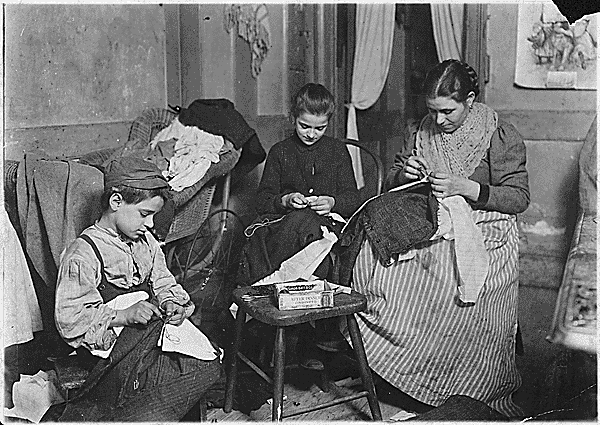
What led to that law? A number of things, including caring about the plight of those who were forced to be wage slaves:
While President Franklin Roosevelt was in Bedford, Mass., campaigning for reelection, a young girl tried to pass him an envelope. But a policeman threw her back into the crowd. Roosevelt told an aide, “Get the note from the girl.” Her note read,
I wish you could do something to help us girls….We have been working in a sewing factory,… and up to a few months ago we were getting our minimum pay of $11 a week… Today the 200 of us girls have been cut down to $4 and $5 and $6 a week.
To a reporter’s question, the President replied, “Something has to be done about the elimination of child labor and long hours and starvation wages.”
– FRANKLIN D. ROOSEVELT, Public Papers and Addresses, Vol. V, New York, Random House, 1936), pp. 624-25.
It took some doing and led to some strong words lashing out at those who would exploit workers:
On May 24, 1937, President Roosevelt sent the bill to Congress with a message that America should be able to give “all our able-bodied working men and women a fair day’s pay for a fair day’s work.” He continued: “A self-supporting and self-respecting democracy can plead no justification for the existence of child labor, no economic reason for chiseling worker’s wages or stretching workers’ hours.” Though States had the right to set standards within their own borders, he said, goods produced under “conditions that do not meet rudimentary standards of decency should be regarded as contraband and ought not to be allowed to pollute the channels of interstate trade.”
This bears repeating:
“… goods produced under conditions that do not meet rudimentary standards of decency should be regarded as contraband”
It’s time to draw the line. And very sad that the lines drawn back in the Good Government days of FDR are being washed away by the teaparty-inspired race to the bottom.
In 2014, we can draw that line in Wisconsin by repealing the 2010 election and returning to power those who care about our state and those who live and work here.
When we vote, we win. And when we win, workers win.
In 1854, Anthony Faas of Philadelphia, patented the accordion.
In 1966, Robert C. Weaver became the first black Cabinet member when he was appointed Secretary of Housing and Urban Development by President Lyndon B. Johnson.
In 1968, Johnny Cash recorded his famous live concert at Folsom Prison.
In 1968, after extensive testing, Dr. K.C. Pollack of the University of Florida audio lab announced that the noise levels at rock concerts were harmful to teenage ears.
In 1990, Douglas Wilder of Virginia became the country’s first elected black governor.
In 2002 , President George W. Bush fainted after choking on a pretzel.
In 2012, the passenger cruise ship Costa Concordia sank off the coast of Italy, killing 32.
Born on This Day
1596 – Jan van Goyen, Dutch painter (d. 1656)
1749 – Friedrich Müller, painter and dramatist (d. 1825)
1806 – Willem Bodeman, Dutch artist (d. 1880)
1808 – Salmon P. Chase, 6th Chief Justice of the United States (d. 1873)
1818 – Adrianus Eversen, Dutch cityscape painter (d. 1897)
1832 – Horatio Alger, Jr., American minister and author (d. 1899)
1836 – Giuseppe Abbati, Italian painter (d. 1868)
1858 – Edmond Aman-Jean, French painter (d. 1936)
1859 – Henry Meynell Rheam, British painter (d. 1920)
1881 – Cesare Maggi, Italian landscape painter (d. 1961)
1884 – Sophie Tucker, Russian-born singer and performer (d. 1966)
1885 – Alfred Fuller, Canadian businessman, The “Fuller Brush Man” (d. 1973)
1887 – Gabriel Gabrio, French actor (d. 1946)
1905 – Kay Francis, American actress (d. 1968)
1914 – Osa Massen, Danish actress (d. 2006)
1919 – Robert Stack, American actor (d. 2003)
1929 – Joe Pass, American jazz guitarist (d. 1994)
1931 – Ian Hendry, English actor (d. 1984)
1931 – Charles Nelson Reilly, American actor (d. 2007)
1935 – Elsa Martinelli, Italian actress
1947 – John Lees, English Musician (Barclay James Harvest)
1954 – Trevor Rabin, South African guitarist (Yes)
1961 – Wayne Coyne, American singer (The Flaming Lips)
1961 – Suggs, English singer (Madness)
1977 – Orlando Bloom, English actor
1978 – Nate Silver, American journalist and statistician
Died on This Day
1599 – Edmund Spenser, English poet (b. 1552)
1625 – Jan Brueghel the Elder, Flemish painter (b. 1568)
Good morning Motley Meese! Hope your weekend was lovely. Sorry it’s over so soon.
PLEASE Don’t Recommend the check-in diary!
Fierces on the weather jar comment are still welcome.
The check-in is an open thread and general social hour. Come back when time allows through the day – the conversation continues.
It’s traditional but not obligatory to give us a weather check where you are and let us know what’s new, interesting, challenging or even routine in your life lately. Nothing is particularly obligatory here except:
Fierces on the Weather Critter Comment are obligatory welcome.
The morning check-in is an open thread posted to give you a place to visit with the meeses. Feel free to chat about your weather, share a bit of your life, grump (if you must), rave (if you can). The diarist du jour sometimes posts and runs, other times sticks around for a bit, often returns throughout the day and always cares that meeses are happy … or at least contented.
On weekends (and holidays), you may find the check-in thread earlier or later than normal because … it is the weekend! Moosies need their beauty rest:
For those new to the Moose, Kysen left a Moose Welcome Mat (Part Deux) so, please, wipe your feet before you walk in the front door start posting.
The important stuff to get you started:
– Comments do not Auto-refresh. Click the refresh/reload on your tab to see new ones. Only click Post once for comments. When a diary’s comment threads grow, the page takes longer to refresh and the comment may not display right away.
– To check for replies to your comments, click the “My Comments” link in the right-hand column (or go to “My Moose”). Comments will be listed and a link to Recent Replies will be shown. (Note: Tending comments builds community)
– Ratings: Fierce means Thumbs Up, Fail means Thumbs Down, Meh means one of three things: I am unFailing you but I can’t Fierce you, I am unFiercing after a mistaken Fierce … or Meh. Just Meh. (p.s. Ratings don’t bestow mojo, online behaviour does).
– The Recommended list has a prominent place on the Front Page because it reflects the interests of the Moose. When people drive-by, we want them to see what we are talking about: news, politics, science, history, personal stories, culture. The list is based on number of recs and days on the list. Per Kysen: “The best way to control Rec List content is to ONLY rec diaries you WANT to see ON the list.”
– Finally, the posting rules for a new diary: “Be excellent to each other… or else”
(Some other commenting/posting/tending notes for newbies can be found in this past check-in and, of course, consult Meese Mehta for all your questions on meesely decorum.)
A look at a very accomplished musician (both as a performer and a long-time music educator) who had a moment-of-truth in revealing his sexual orientation twenty years ago, as we will see after the jump …..
Even if you are not a jazz fan: one musician whose work you should know of is the vibraphone player Gary Burton - whose fifty-year career has him not only performing in the jazz world, but also as a sideman to others in different music genres, as an early pioneer of jazz-rock, a 7-time Grammy winner and as a music educator and dean at Boston’s noted Berklee College of Music. I first heard an album of his when I had a work/study job at a public library while attending a community college … and have never stopped.
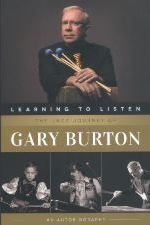
Last year, he released his autobiography Learning to Listen - which George Wein (the founder of the Newport Jazz Festival) considers the best musical biography he has ever read, due in large part to its honesty. Wein said of Duke Ellington’s Music is my Mistress that what was in the book was true, but that it left out way too much. I finished the book over the Thanksgiving weekend …. and came to agree with Wein, as this book being the best insight into a musician’s life as I can recall (and I’ve read several).
And Gary Burton can stand out as someone who made his living playing the vibraphone (vibes), which is an uncommon instrument. Many in the general public might only be able to name the late Lionel Hampton as a vibes player (with Cal Tjader, Red Norvo and the Modern Jazz Quartet’s Milt Jackson known mostly to jazz buffs). As the All-Music Guide’s Scott Yanow noted, Burton along with Bobby Hutcherson are the two best vibes players who came-of-age in the 1960’s. Gary Burton says that - compared to instruments such as the trumpet and other horns, violins, etc. - the vibes are a relatively easy instrument to get a good sound out of in a short amount of practicing. The downside? Well, they’re expensive and bulky to carry.
Gary Burton was born in 1943 in Anderson, Indiana: forty miles north-east of Indianapolis. In his book, Burton notes the many jazz stars born in the state (including Wes Montgomery, Freddie Hubbard, J.J. Johnson and Slide Hampton) and said he received a good musical education in the state. But he also had anxieties about his sexual orientation, which he wrote was a down-side of growing-up in small-town Indiana.
Many musicians who become known as vibes players begin (and also continue) as drummers, with Lionel Hampton and Milt Jackson as prime examples. Gary Burton came to it via piano lessons (with Bill Evans as a role model). He also found that he was blessed with perfect pitch, which helped him learn easily. And what many people will remember most about Gary Burton when he dies: will be his using four mallets (two in each hand) as a vibraphonist, most uncommon on his instrument. At least, that is what he predicts in the last paragraph of his autobiography.
He was a student at a (then) relatively unknown Berklee College of Music in Boston at the beginning of the 1960’s – and then found he was receiving too many offers of work to continue. One interesting sidenote: he settled in Nashville, where he worked with Chet Atkins plus Hank Garland and Floyd Cramer for a few years. He then spent time with pianist George Shearing (noting several anecdotes about Shearing using his blindness to play practical jokes) and with Stan Getz, which was quite rewarding yet trying (as Stan’s alcohol/drug use was at a peak in the mid-1960’s). Finally, he felt the time was right to strike out on his own.
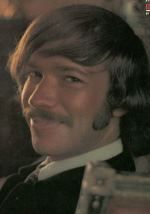
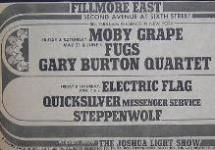
In time, he formed a version of his Gary Burton Quartet with another young, influential musician: guitarist Larry Coryell. Their four 1967 & 1968 albums (including Duster and Lofty Fake Anagram) are one possibility for the advent of jazz-rock. One reason: they were often booked by Bill Graham (as part of his wide-ranging musical tastes) to perform at the Fillmore in New York and San Francisco – with Gary Burton wearing a fringed buckskin jacket in those days when concerts catered to a wide range of performers (they even visited Carnaby Street while in London).
Burton, though, did have his limits as far as becoming too much like the rock acts they were paired with: shouting “Don’t ever play a backbeat in my band!” to drummer Bob Moses. He knew the band had to end when he saw both Coryell (and bassist Steve Swallow) rise in stature to the point where they needed to strike-out on their own ….. just as he had done a few years earlier.
One thing the experience left him with, though, was an appreciation for a vibes/guitar pairing in music. Over the years, he has been in bands with (or recorded with) other jazz guitarists such as Mick Goodrick and John Scofield … and it was his band that first introduced Pat Metheny to the jazz world. Gary Burton even recorded a 1992 album called Six Pack - which included six noted guitarists such as (the recently-deceased) Jim Hall, Kevin Eubanks (formerly Jay Leno’s bandleader) and even B.B. King.
After establishing his career, Gary Burton was enticed to return to Berklee in 1971: first as an adjunct instructor, then a full-fledged faculty member … and retiring in 2003 as an executive vice president (after having served as Dean for several years). Berklee had been founded as a music school to serve the needs of jazz musicians (for whom conservatories had not embraced for many decades). And yet despite his not wanting to become a rock musician, Gary Burton embraced the need for the school to include rock music in its curriculum – after having many name rock musicians tell the rest of the faculty their wishes in music education (which included being able to hire musicians who could read music, write charts, etc.) that tallied with the school’s traditional strengths. Eventually, he oversaw expansion into other types of music (including electronica) and also online seminars, summer sessions in California, etc. He left the school that year of 2003 … in much better shape than it was in 1971.
Over the years, his work as a sideman brought him to new listeners. Besides his forays to Nashville, he also appeared on albums by Bruce Cockburn and k.d. lang plus recordings and concerts with tango music superstar Astor Piazzolla and duets with Makoto Ozone the classical pianist. And while most of his recordings have been instrumentals, he did an album with the singer Rebecca Parris in 1993.
Still, there was much about his career I did not know until reading his autobiography last year. In its chapters, he has sidebar essays about many famous musicians he met over the years (from Lionel Hampton, to Miles Davis, to Milt Jackson) with many opinions expressed about their influence and demeanor. He said Duke Ellington was unfailingly polite to him (saying at one function, “Now I know this is a classy event …. if they invited you, Gary.”) Yet Burton also wrote about musicians who stayed as performers too long (after their skills had atrophied to the point where they could no longer play, naming Oscar Peterson as one of them) and was delighted in his own ability to gauge which of his school’s students had what it takes to break-out as stars.
Easily the book’s common thread (besides the music) is Gary Burton’s intermittent discussions about his sexual orientation. He had been married twice; once in his twenties and later to the granddaughter of film producer Samuel Goldwyn (which resulted in two children). Yet all along, he harbored real doubts, and having brief, very closeted affairs throughout his life. The jazz world was long known for being homophobic and he always worried about what would happen to his career.
By the 1980’s (after his second divorce) he resolved to end his double life. After bringing a date to a function where he saw other Berklee faculty, he spoke to his bandmates (who said they already knew) and eventually revealed himself to the school’s administration, who were fine with him.
In the opening chapter of the book, he wrote of his decision neither to broadcast his orientation – nor deny it – after he had come out on an individual basis. He expected it would become known publicly in, say, a Downbeat interview. But he wound up revealing himself in a major way when he appeared on the NPR show Fresh Air with host Terry Gross in 1994.
She is married to a jazz critic (Francis Davis) and so I have heard her discuss this musical genre frequently. And Burton noted how good she is: not asking “What was it like to work with Stan Getz?” as many interviewers would, but instead “Stan Getz had a reputation for being difficult to work with - what was your experience?” And Burton felt more comfortable responding to that, rather than having brought-it-up about a man who was no longer alive to defend himself.
But then she asked … if his recently having come out “had affected his playing or career?” He took a deep breath … but responded, realizing that it was now-or-never (even though she had told him before they started recording that she would leave out anything he was uncomfortable with).
Today, he is glad how things have turned out and - despite some health issues - has had a busy schedule in the ten years since leaving Berklee. He has had many Gary Burton Quartets and Quintets over the years: the latest pairs him with former student guitarist Julian Lage (yet another guitarist making his debut) plus bassist Scott Colley and drummer Antonio Sanchez, with their sophomore album Guided Tour released last August.
His legacy would appear to be well-established, besides his academic program achievements. In 1968 he was the youngest ever Jazzman of the Year (at age twenty-eight) voted by Downbeat magazine readers, and he has 21 total Grammy nominations to his credit.
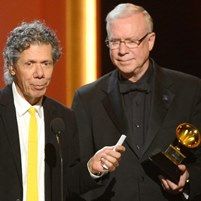
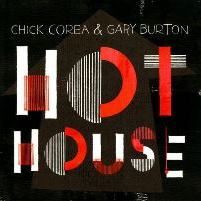
While he is most often seen with guitarists: his most frequent duet partner is the legendary pianist Chick Corea – and of Gary Burton’s seven Grammy Award winning albums – including last year’s “Hot House” – six are either duets with (or bands with) Chick Corea (left in photo below).
Two weeks from today Gary Burton turns age 71, he became a grandfather two years ago, was able to marry his long-time male partner last summer in Provincetown, Massachusetts ….. and also last autumn (while on tour with his quartet) finally reunited with his old guitarist Larry Coryell – for the first time in forty-five years. If that original Gary Burton Quartet (w/Coryell, Steve Swallow and either Roy Haynes or Bob Moses on drums) ever reunites: even though I’ve seen Gary perform twice … I’ll be in the first row.
Here is Gary with his new band, performing the Mongo Santamaria classic tune Afro Blue with his current quartet in 2011 ….
And for one with lyrics: here is the Anita Baker song Good Enough, from Gary’s album with singer Rebecca Parris ….
Residents of nine counties in West Virginia have been told not to use or drink their water after a chemical used by the coal industry spilled into the Elk River on Thursday. Gov. Earl Ray Tomblin declared a state of emergency as more than 100,000 customers, or 300,000 people, are without safe drinking water.
“Don’t make baby formula,” said West Virginia American Water Company president Jeff McIntyre. “Don’t brush your teeth. Don’t shower. Toilet flushing only.”
The chemical, 4-Methylcyclohexane Methanol (MCHM), is used to wash coal of impurities and spilled from a tank at Freedom Industries into the river. While the amount of MCHM that spilled wasn’t immediately known, West Virginia American Water has been conducting water quality testing every hour. According to Laura Jordan, a spokesperson with the water company, they believe the chemical is leaking at ground level and “there is a possibility this leak has been going on for sometime before it was discovered Thursday,” WSAZ reported.
First, why on earth was a chemical capable of doing that much damage within a 100 miles of a water source much less in a tank next to the river?
Second, no one knows how long it has been leaking? Do you just wait for people to get sick and die before you “look into it”?
Third, “Freedom Industries”? Hello, fake name alert!! Good luck trying to find these guys to pay for cleanup.
In America, the costs of free enterprise run amok are always borne by the citizens. When will we finally say “that cost is too high”?
That last question, by the way, is addressed to everyone in America, not just West Virginians.
In this week’s address, President Obama calls 2014 a year of action, which should start with Congress quickly passing emergency unemployment insurance for the 1.3 million Americans who lost this vital lifeline as they fight to find jobs and make ends meet.
Hi, everybody. Yesterday, we learned that in 2013, our businesses created 2.2 million new jobs – including 87,000 last month. Our unemployment rate is the lowest it has been since October 2008. And across our broader economy, there are signs of progress. Our manufacturing and housing sectors are rebounding. Our energy, technology, and auto sectors are booming. Thanks in part to the reforms in the Affordable Care Act, health care costs now eat up less of our economy – over the past four years, costs have grown at the slowest rate on record. And since I took office, we’ve cut our deficits by more than half.
Thanks to the hard work and sacrifice of the American people, our economy is growing stronger. But we know we’ve got more work to do together. Our success as a country depends on more than the success of our broader economy – it depends on the success of the American people. It depends on your ability to make ends meet, provide for your families, and, with a little hard work, feel like you can get ahead.
So we’ve got to keep our economy growing, and make sure more Americans have the opportunity to share in that growth. We’ve got to keep creating jobs that offer new opportunity, and make sure those jobs offer the wages and benefits that let you rebuild some security. We’ve got more kids to educate, and families to get covered with health insurance, and an immigration system to fix. And we’ve got to make sure this recovery leaves no one behind.
This will be a year of action. I’ll keep doing everything I can to create new jobs and new opportunities for American families – with Congress, on my own, and with everyone willing to play their part. And that action should begin by extending unemployment insurance for Americans who were laid off in the recession through no fault of their own. This vital economic lifeline helps people support their families while they look for a new job. And it demands responsibility in return by requiring that they prove they’re actively looking for work. But Republicans in Congress just let that lifeline expire for 1.3 million Americans. And if this doesn’t get fixed, it will actually hurt about 14 million Americans over the course of this year. Earlier this week, Democrats and Republicans in the Senate took the first steps toward making this right. But Congress needs to finish the job right away. More than one million Americans across the country will feel a little hope right away.
Working folks are looking for the kind of stable, secure jobs that went overseas in the past couple decades. So next week, I’ll join companies and colleges and take action to boost the high-tech manufacturing that attracts the kind of good new jobs a growing middle class requires.
Business owners are ready to play their part and hire more workers. So next week, I’ll be joined by college presidents as we lay out specific steps we can take to help more workers earn the skills they need for today’s new jobs. Later this month I’ll host CEOs at the White House to announce commitments we’re making to put more of the long-term unemployed back to work.
And at the end of the month, in my State of the Union Address, I will mobilize the country around the national mission of making sure our economy offers everyone who works hard a fair shot at opportunity and success. As Americans, that’s what we should expect. And after everything you’ve done to recover and rebuild from crisis these past five years – after all your hard work and sacrifice – that’s what you deserve.
Thanks, and have a great weekend.
Bolding added.
~
Editor’s Note: The President’s Weekly Address diary is also the weekend open news thread. Feel free to leave links to other news items in the comment threads.
Fierces on the Weather Critter Comment are obligatory welcome.
The morning check-in is an open thread posted to give you a place to visit with the meeses. Feel free to chat about your weather, share a bit of your life, grump (if you must), rave (if you can). The diarist du jour sometimes posts and runs, other times sticks around for a bit, often returns throughout the day and always cares that meeses are happy … or at least contented.
On weekends (and holidays), you may find the check-in thread earlier or later than normal because … it is the weekend! Moosies need their beauty rest:
For those new to the Moose, Kysen left a Moose Welcome Mat (Part Deux) so, please, wipe your feet before you walk in the front door start posting.
The important stuff to get you started:
– Comments do not Auto-refresh. Click the refresh/reload on your tab to see new ones. Only click Post once for comments. When a diary’s comment threads grow, the page takes longer to refresh and the comment may not display right away.
– To check for replies to your comments, click the “My Comments” link in the right-hand column (or go to “My Moose”). Comments will be listed and a link to Recent Replies will be shown. (Note: Tending comments builds community)
– Ratings: Fierce means Thumbs Up, Fail means Thumbs Down, Meh means one of three things: I am unFailing you but I can’t Fierce you, I am unFiercing after a mistaken Fierce, or Meh. Just Meh. (p.s. Ratings don’t bestow mojo, online behaviour does).
– The Recommended list has a prominent place on the Front Page because it reflects the interests of the Moose. When people drive-by, we want them to see what we are talking about: news, politics, science, history, personal stories, culture. The list is based on number of recs and days on the list. Per Kysen: “The best way to control Rec List content is to ONLY rec diaries you WANT to see ON the list.”
– Finally, the posting rules for a new diary: “Be excellent to each other… or else”
(Some other commenting/posting/tending notes for newbies can be found in this past check-in and, of course, consult Meese Mehta for all your questions on meesely decorum.)
Not that this should make Mr. Christie or any other potential GOP candidate complacent. Republicans operate under a double media standard that holds them to a much lower scandal threshold. (emphasis my own) In that sense the pathetic New Jersey traffic-lane scandal may be, as Mr. Obama likes to say, a teachable moment.
Perhaps the Murdoch-owned Wall Street Journal hasn’t watched its sister outlet, Fox News, try and stir outrage over Benghazi 24/7 on a story that doesn’t exist. Perhaps it hasn’t watched the same channel on Fast and Furious. Perhaps it hasn’t watched the same channel on the IRS scandal.
Perhaps they consider reporting on Iran Contra or the no-bid contracts of the Iraq war not newsworthy and therefore any reporting on them is creating a double standard. Perhaps they consider petty political revenge because a politician from the other political party did not endorse their candidate for re-election. Perhaps they consider investigating whether that revenge broke federal law and whether it affected emergency response to be a non-story that is only reported because it is a Republican.
Need I go further and remind the Wall Street Journal that while the right wing ignored Sen. David Vitter’s visiting prostitutes and being in the D.C. Madam’s black book, they impeached Bill Clinton for not being forthright about his affair with Monica Lewinsky. Basically, in their mind, investigating whether we were lied into war is holding Republicans to a lower scandal standard than impeaching the President of the United States because he couldn’t keep it in his pants.
This, of course, really comes back to partisan politics and the fact that Chris Christie is the apparent horse of the Republican mainstream (the one that wants to get rid of the Tea Party) in the 2016 election. They presumably believe that he is all that stands between Rand Paul or Ted Cruz or some other unelectable Tea Partier receiving the Republican nomination and proceeding to be crushed by former Secretary of State Hillary Rodham Clinton in the general election.
The Journal writes, to describe the difference between President Obama and Governor Christie:
We mention the IRS because Mr. Christie’s contrition contrasts so sharply with President Obama’s handling of the tax agency’s abuse of political opponents and his reluctance to fire anyone other than a military general for anything.
What contrition, exactly?
Was it that he tried to make himself out to be another innocent victim in the whole plot? Was it that he outright said he fired his aide for lying to him, rather than firing her for the fact that she carried out this plan of revenge? Was it that he sought to lay blame at every other person possible throughout his apology?
That’s not contrition. That’s trying to make political opportunity out of the desperate attempt to save his political career. The Wall Street Journal says that as long as Christie wasn’t involved, then his political ambitions should remain intact. They say he just needs new advisers. Given the advisers he’s selected to the present, why should we expect anything different going forward? Even in the most charitable light, Christie displays poor judgment in his selection of aides. It’s exactly the opposite of what’s needed in a president.